
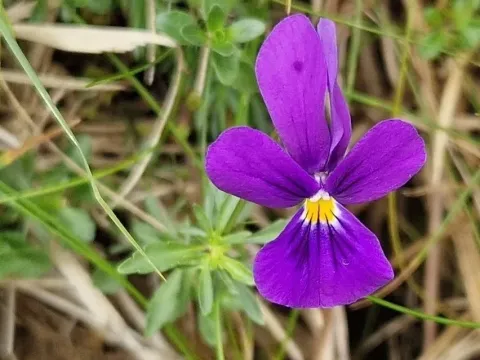
Viola declinata
Viola declinata
Viola declinata, commonly known as the declining violet, belongs to the Violaceae family. It is a perennial herbaceous plant native to the high-altitude regions of the Carpathian Mountains, typically found in subalpine grasslands and rocky slopes.
What the section contains
Viola declinata
The culture thrives in cool, temperate climates and requires well-drained, nutrient-rich soils with a slightly acidic to neutral pH. High humidity and alpine light conditions are essential for the plant to maintain its characteristic compact growth habit and vibrant flowering.
Botanically, the plant features a basal rosette of leaves and striking purple-to-blue flowers. Its root system is specialized to anchor the plant firmly in rocky substrates, allowing it to withstand the harsh environmental stressors typical of high elevations.
In terms of horticultural use, Viola declinata is primarily cultivated as an ornamental plant for rock gardens and alpine beds. Its high resilience to low temperatures makes it an excellent candidate for specialized landscaping projects in cooler climatic zones.
Cultivation success depends on simulating its natural mountain environment. Growers should focus on providing cool soil temperatures, avoiding water stagnation, and offering protection from intense mid-day heat. Applying a gravel mulch around the base of the plant helps to conserve moisture and protect the root crown from rot.