
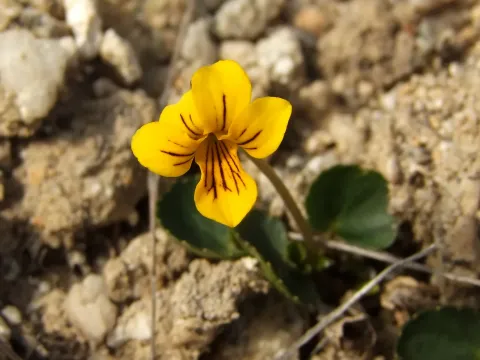
Viola crassa
Viola crassa
Viola crassa, commonly known as the thick violet, belongs to the Violaceae family. It is a specialized alpine perennial that has evolved to thrive in high-altitude environments, characterized by its fleshy, moisture-storing leaves and low-growing, rosette-forming habit.
What the section contains
Viola crassa
The plant originates from harsh, mountainous regions where it occupies niches such as volcanic scree and rocky slopes. Its natural range is restricted to high-elevation zones, which explains its unique physiological adaptations to cold, wind, and low nutrient availability.
For successful cultivation, the plant requires an environment that mimics its natural scree habitat. Essential requirements include a mineral-based substrate with excellent drainage, such as a mix of grit, sand, and a small portion of loam to prevent root rot.
Climatic requirements are specific: Viola crassa demands full sun and cool conditions. High humidity and excessive summer heat are the primary factors that cause decline, making it unsuitable for traditional garden beds and better suited for troughs or specialized rock gardens.
The primary horticultural use of this species is as a specialty plant for alpine enthusiasts. Its ornamental value lies in its unique texture, compact form, and adaptation to extreme, nutrient-poor conditions, making it a masterpiece of high-altitude gardening.