
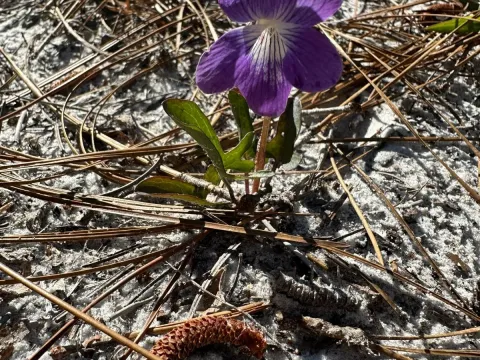
Seven-lobed violet
Viola septemloba
The seven-lobed violet (Viola septemloba) belongs to the Violaceae family. This perennial species is native to the southeastern United States, often found in sandy habitats and open pine woodlands.
What the section contains
Seven-lobed violet
For successful cultivation, Viola septemloba requires a well-draining, slightly acidic soil. Adding organic amendments can help improve the texture and water retention without causing waterlogging.
Sunlight requirements are specific: the plant thrives in bright, filtered light. While it can tolerate some sun, protecting the plants from harsh afternoon heat is essential for maintaining health.
Temperature management is critical in non-native climates. The plant prefers moderate temperatures and is generally suited for regions where extreme freezing is not prolonged.
Routine care involves consistent moisture levels. However, gardeners must ensure the soil dries out slightly between waterings to prevent root-related issues common in the Violaceae genus.
Root rot is the most common threat, usually triggered by poor drainage or excessive irrigation. It is essential to ensure that the potting medium or soil remains airy and porous.
Pests like aphids and spider mites can infest the foliage, particularly during dry weather. These pests weaken the plant by extracting sap from the leaves and stems.
Powdery mildew may develop if the plant lacks sufficient air circulation. Improving spacing between plants and keeping the foliage dry helps mitigate this risk significantly.
Slugs and snails often feed on the tender young leaves, potentially causing significant damage to the plant's aesthetic and vitality during the spring growing season.
Preventative measures, such as monitoring for signs of infestation and ensuring proper plant hygiene, are the most effective strategies for maintaining a healthy and robust violet collection.