
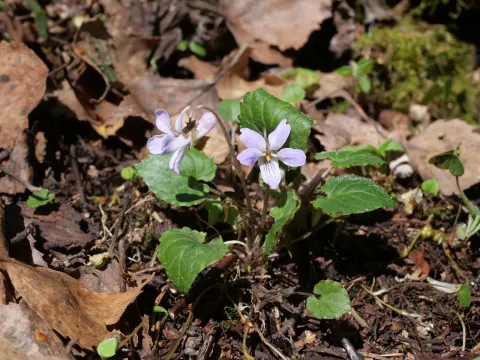
Selkirk's violet
Viola selkirkii
Selkirk's violet (Viola selkirkii) is a member of the Violaceae family, native to cool, temperate regions across the Northern Hemisphere. It typically thrives in moist, shaded forest environments where it can establish itself in rich, humus-filled soil.
What the section contains
Selkirk's violet
The plant requires a stable moisture regime to prevent root desiccation. It is well-adapted to shade and performs poorly in direct sunlight, which can lead to wilting and reduced floral production throughout the growing season.
Soil requirements focus on high organic content and good drainage. While the species appreciates moisture, it cannot tolerate waterlogged conditions, which promote root rot and weaken the overall vitality of the plant.
Cultivation practices involve maintaining a natural mulch layer, which mimics the forest floor. This layer helps regulate soil temperature, suppress weeds, and retain the necessary moisture levels for optimal growth.
Economically and horticulturally, this violet is valued primarily as an ornamental specimen for shaded rock gardens and woodland landscapes. It is a niche plant sought after by collectors for its delicate beauty and specific environmental preferences.
Common health issues for this species include fungal infections such as powdery mildew, which often develop when the environment lacks sufficient airflow or when foliage remains damp for prolonged periods.
Pests that frequently target the foliage include spider mites and aphids, which can stunt plant growth. Additionally, slugs and snails are significant threats to young seedlings and succulent leaf tissues.
Effective management includes regular inspection of the leaf underside for mite and aphid activity, combined with manual removal of slugs if the population becomes problematic.
Improving spacing and thinning out overgrown patches is a crucial preventative measure to ensure adequate air circulation and reduce the incidence of fungal pathogens.
Chemical intervention should be kept to a minimum in woodland-style gardens. If necessary, use selective systemic insecticides or fungicides to manage severe infestations while protecting the surrounding ecosystem.