
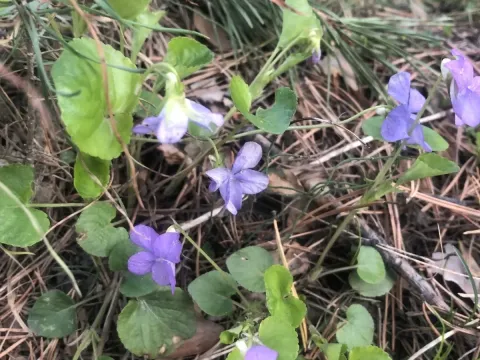
Sakhalin violet
Viola sacchalinensis
The Sakhalin violet (Viola sacchalinensis) is a perennial herbaceous plant belonging to the Violaceae family. Native to the Sakhalin and Kuril Islands, this species naturally occurs in woodland settings and moist meadow habitats, adapting well to cool environments.
What the section contains
Sakhalin violet
Botanically, the plant features a branched rhizome system and a rosette of ovate or lanceolate leaves. Its flowers, typically appearing in the late spring, exhibit subtle purple to white tones, reflecting its adaptation to the low-light conditions of the forest floor.
For cultivation purposes, this plant requires a climate that mimics its native habitat, specifically avoiding extreme heat and dry air. It performs best when placed in partial shade, where it receives gentle morning or evening sunlight but remains protected from the scorching afternoon sun.
Soil requirements involve a rich, well-draining substrate with a balanced moisture level. It is essential to ensure that the soil remains consistently moist throughout the growing season, as the plant is susceptible to stress if the root system dries out completely.
In terms of agricultural and horticultural use, the Sakhalin violet is mainly valued as a decorative perennial. Its inherent cold hardiness allows it to be used effectively in rock gardens and shaded borders where more sensitive ornamental species might fail to thrive.
The most common disease threats include fungal infections such as powdery mildew and leaf spot, which often develop when air circulation around the plants is insufficient or when humidity levels remain excessively high for extended periods.
Pest issues often involve common garden insects like aphids and spider mites. These pests tend to colonize the plant during dry spells. Maintaining appropriate watering routines and periodic inspections are the most effective strategies for managing these threats in a cultivated environment.