
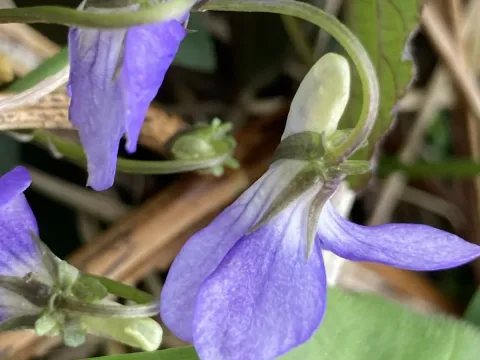
Rivin's violet
Viola riviniana
Rivin's violet, scientifically known as Viola riviniana, belongs to the Violaceae family. It is a perennial herbaceous plant native to Europe and parts of Western Asia, frequently found in woodlands and meadows.
What the section contains
Rivin's violet
The plant thrives in semi-shaded environments and prefers well-drained, humus-rich soils. It is highly valued in ornamental gardening for its ability to cover ground in low-light conditions under trees or shrubs.
Botanically, it is distinguished by its heart-shaped leaves and pale violet to blue flowers. The plant usually grows in clumps and spreads steadily, forming a dense vegetative cover if the growing conditions are favorable.
The cultivation of this species requires a consistent supply of moisture, particularly during the active growing phase. It is essential to ensure that the soil does not become waterlogged to prevent root health issues.
Regarding climate, Viola riviniana is well-adapted to temperate zones, demonstrating robust cold tolerance. It is a reliable plant for perennial beds that require minimal maintenance once established.
Fungal infections such as powdery mildew represent a significant threat to Rivin's violet, especially in gardens with poor air circulation and high humidity levels.
Leaf spot diseases can also occur, often manifesting as dark patches on the foliage, which may be mitigated by removing infected plant parts during sanitation.
Insect pests including aphids and spider mites are known to infest the plant during dry spells, requiring careful monitoring to prevent excessive damage to the leaves.
Slugs and snails are particularly problematic for young seedlings and tender leaves, frequently consuming them during damp weather conditions throughout the spring.
Integrated pest management strategies involve maintaining garden hygiene, using mulch to suppress weeds, and occasionally using eco-friendly soaps to manage soft-bodied pests.