
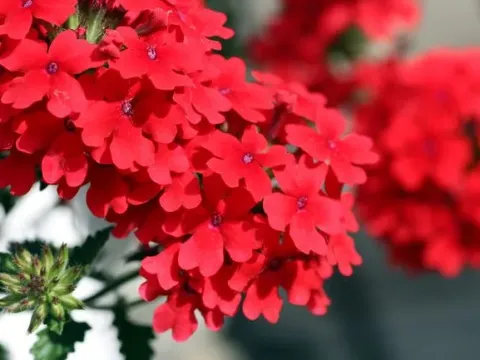
Verbena hybrids
Verbena hybrids
Verbena hybrids are popular ornamental plants belonging to the Verbenaceae family. While they are often perennial in warmer climates, they are typically cultivated as annuals in temperate regions.
What the section contains
Verbena hybrids
Seed sowing for transplants is usually performed in late winter or early spring, approximately 8-10 weeks before the last expected frost date.
Seeds require a high-quality, well-draining seed-starting mix. It is recommended to keep the substrate consistently moist but not waterlogged during the germination process.
Transplanting should occur once the seedlings have developed two sets of true leaves, moving them into individual containers to allow for robust root development.
Hardening off the plants is a crucial step before moving them to their permanent outdoor location, ensuring they are acclimated to direct sunlight and fluctuating temperatures.
Verbena hybrids thrive in full sun conditions. A minimum of 6 to 8 hours of direct sunlight is necessary to promote vigorous growth and dense flower production.
The soil should be fertile, sandy-loam, and possess excellent drainage. These plants are sensitive to "wet feet," which can cause root rot very quickly.
Watering should be managed carefully; while verbena is somewhat drought-tolerant once established, consistent moisture is required during dry spells to maintain high bloom performance.
Fertilization with a balanced, slow-release fertilizer at planting time, followed by light liquid feeding throughout the season, helps maintain color vibrancy.
Spacing is vital for these plants to ensure proper air circulation, which prevents many common foliage diseases associated with stagnant, humid air.
Powdery mildew is the most common disease affecting verbena, usually appearing as a white, dusty fungal growth on leaves during periods of high humidity.
Aphids are frequent pests that congregate on the undersides of leaves and on flower buds, causing stunted growth and potentially transmitting viral infections.
Spider mites may also pose a threat during hot and dry summer months, leading to leaf discoloration and a stippled appearance on the foliage.
Root rot, caused by various pathogens like Phytophthora, is almost always a result of poor drainage or overwatering, necessitating strict moisture control.
Integrated pest management, including regular inspection and the use of insecticidal soaps or horticultural oils, is the most effective approach for control.
Verbena hybrids are widely used for landscaping, including borders, hanging baskets, and mass plantings, providing a continuous display of color throughout the season.
Deadheading—the removal of faded blossoms—is essential to keep the plants looking tidy and to encourage them to redirect energy into producing new blooms.
The plant demonstrates a strong response to pruning; pinching back the tips of young stems will result in a bushier, more compact, and floriferous plant habit.
In regions with harsh winters, these plants are harvested (removed) at the end of the season after they are killed by the first significant frost.
For gardeners looking for long-lasting color, Verbena hybrids remain one of the most reliable choices for summer gardens, provided they receive adequate care and sunlight.