
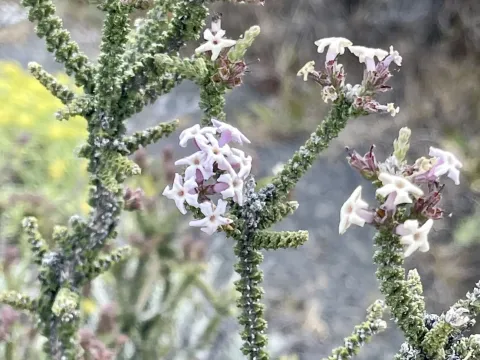
Verbena tridens
Verbena tridens
Verbena tridens, also classified as Acantholippia seriphioides, is a perennial shrub belonging to the Verbenaceae family. It is endemic to the arid regions of Patagonia, where it has evolved to thrive in high-wind and low-precipitation conditions.
What the section contains
Verbena tridens
The plant exhibits a dense, woody, and branched architecture, typically reaching up to one meter in height. Its small, characteristic trident-shaped leaves serve as an adaptation to minimize water loss through transpiration in high-evaporation environments.
Cultivation requires full sun exposure throughout the day. Insufficient light leads to etiolation, where the plant develops weak stems and loses its characteristic compact form, making it susceptible to mechanical damage from wind.
Soil requirements focus primarily on drainage. Verbena tridens is adapted to rocky, sandy, or impoverished soils. Heavy, clay-rich soils that retain moisture are detrimental to the plant, as they frequently lead to crown and root rot, which are the most common causes of failure in cultivation.
This species is exceptionally cold-hardy, capable of surviving harsh frosts and extreme temperature fluctuations. Its physiological adaptation to the Patagonian climate makes it a suitable candidate for projects in regions with long, cold, and dry dormant periods.
The primary agricultural interest in Verbena tridens lies in its chemical composition, specifically its essential oils. The leaves and stems are harvested for their medicinal value, traditionally used in local communities for their digestive and stimulating therapeutic properties.
Harvesting is typically timed with the peak of the flowering period when the concentration of secondary metabolites is highest. Pruning should be performed with sharp equipment to avoid crushing the stem tissues, which can facilitate the entry of pathogens into the woody core of the plant.
Post-harvest processing involves air-drying in a shaded, well-ventilated environment. This method is critical for preserving the integrity of volatile compounds found in the foliage, ensuring the product retains its efficacy and aromatic quality for subsequent use.
In terms of ecological utility, Verbena tridens is utilized in land restoration projects. Its extensive root system acts as a natural stabilizer for loose, degraded soils, playing a vital role in preventing topsoil loss in vulnerable desertified habitats.
As a horticultural plant, it is gaining popularity in xeriscaping and sustainable landscape design. Its ability to maintain foliage and structural integrity with little to no supplemental water makes it an ideal choice for water-wise gardening in arid climates.