
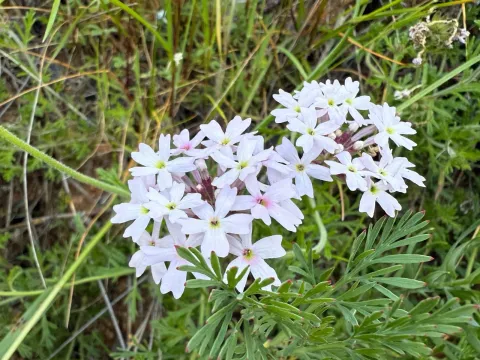
Verbena laciniata
Verbena laciniata
Verbena laciniata belongs to the Verbenaceae family and is widely appreciated for its delicate foliage and flowering habits. Propagation is primarily carried out through seeds, which should be sown indoors in late winter to early spring.
What the section contains
Verbena laciniata
Seed germination can be inconsistent, therefore, cold stratification for about two weeks is highly recommended. Seeds should be sown in a sterile, well-draining seed-starting mix, barely covered by a thin layer of soil or vermiculite.
The germination process requires temperatures between 20-22 degrees Celsius. Once seedlings emerge, providing supplemental light is crucial to prevent etiolation and ensure strong, stocky growth in the early stages.
Transplanting should occur once the first set of true leaves develops. It is important to harden off the seedlings gradually by exposing them to outdoor conditions over a period of 10 to 14 days before final planting.
The optimal planting time in the field is after the last frost date has passed. Providing a frost-free environment is essential for the initial establishment of the plants, especially in regions with cool spring climates.
As a species native to South America, Verbena laciniata requires a location with full sun exposure. It needs at least 6 to 8 hours of direct sunlight daily to maintain its vigorous growth and profuse flowering cycle.
The plant thrives in well-drained, fertile soil with a neutral pH. It is particularly sensitive to waterlogged conditions, which can lead to root system failure; therefore, soil aeration is a top priority for successful cultivation.
Consistent moisture is needed, especially during the peak of the growing season. While the plant has some drought tolerance once established, sustained soil moisture helps maintain plant health and flower quality.
Fertilization should be balanced, using a slow-release granular fertilizer or liquid feed during the flowering period. High-potassium formulas are effective in promoting continuous bud production throughout the summer.
Spacing requirements involve planting individuals 25-30 centimeters apart. This spacing facilitates good airflow between plants, which is a critical management strategy for reducing the humidity levels around the foliage.
Powdery mildew is the most prevalent fungal threat to Verbena laciniata, often triggered by high humidity and poor air circulation. Symptoms include a white, dust-like substance appearing on the leaves.
Root rot caused by Phytophthora or Pythium species may occur if the soil remains excessively wet. Ensuring that the planting site has excellent drainage is the primary defense against these soil-borne pathogens.
Pests like aphids are common, especially in early spring when new, succulent growth is abundant. Spider mites can also become problematic during hot, dry summer months, leading to leaf stippling and yellowing.
Integrated pest management, including the use of neem oil or insecticidal soaps, is effective for controlling minor infestations. Regular scouting of the plants allows for timely intervention before populations reach critical levels.
- Sanitize gardening tools to prevent pathogen spread.
- Remove any infected plant debris immediately.
- Ensure proper plant density to maintain air movement.
- Monitor for early signs of leaf discoloration.