
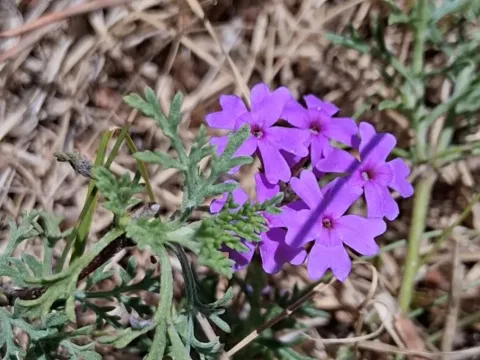
Verbena tenera
Verbena tenera
Verbena tenera, a member of the Verbenaceae family, is an attractive herbaceous plant characterized by its delicate, dissected foliage and vibrant flowers.
What the section contains
Verbena tenera
For optimal results, seeds should be sown indoors in late winter or early spring, typically in March, allowing sufficient time for seedling development.
The seeds require a lightweight, well-draining seed-starting mix. Covering them slightly with substrate and maintaining a warm environment is essential for germination.
Transplanting into the garden should only occur once the threat of frost has completely passed and the soil has reached adequate warmth.
The plant can also be propagated via cuttings, which is a highly effective method for gardeners looking to maintain specific traits and ensure faster establishment.
This species thrives in full sun, requiring at least six to eight hours of direct sunlight daily to produce high quantities of blooms.
Well-drained soil is non-negotiable for Verbena tenera; it prefers sandy or loamy textures that do not hold excessive moisture.
While the plant shows some resistance to occasional dry spells, regular watering is necessary during extended hot periods to keep the foliage lush.
It is important to avoid heavy, clay-based soils that trap water, as these conditions significantly increase the risk of root rot and plant decline.
Periodic fertilization with a balanced, water-soluble fertilizer throughout the growing season will help maintain continuous flower production.
Powdery mildew is the most significant disease affecting the foliage, usually triggered by high humidity levels and lack of air movement between plants.
Root rot, caused by overwatering or poorly draining soil, can quickly destroy the plant, making soil management the most important preventive step.
Common pests include aphids and spider mites, which can cause stunted growth and chlorosis if left untreated during dry spells.
Maintaining adequate spacing between individual plants is the best cultural practice to prevent the spread of fungal spores and pest colonies.
Integrated pest management, including the use of neem oil or insecticidal soaps, is recommended at the first signs of pest infestation to protect the garden.