
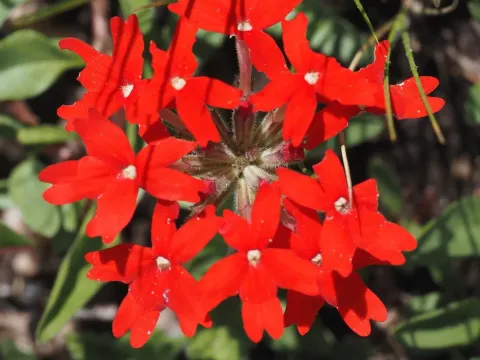
Verbena peruviana
Verbena peruviana
Verbena peruviana is a perennial herbaceous plant belonging to the Verbenaceae family, often grown for its creeping habit and vibrant flowers. Seeds should be sown indoors in late winter to ensure a robust start for the growing season.
What the section contains
Verbena peruviana
The seeds require a light, well-draining sowing mix and a stable temperature of about 20 degrees Celsius. Surface sowing with minimal coverage is ideal as the seeds need some light for germination.
Once seedlings have developed at least two sets of true leaves, they should be transplanted into individual pots to avoid root competition. Proper spacing ensures strong stems and prevents them from becoming leggy.
Hardening off the seedlings is a critical step before moving them to a permanent location outdoors. This process should take place over 7 to 10 days to gradually expose the plants to outdoor conditions.
Planting in the garden is recommended once all danger of frost has passed, usually in mid-to-late spring, with a spacing of 25–30 centimeters between specimens.
This species thrives in full sun, which is essential for prolific flowering. Insufficient sunlight will lead to spindly growth and a significant reduction in the number of blooms throughout the season.
Soil requirements include well-draining, fertile ground with a neutral pH. The plant performs poorly in compacted or clay soils that tend to retain excess moisture for long periods.
While Verbena peruviana has moderate drought tolerance once established, consistent soil moisture promotes faster growth and more intense flowering during the summer months.
Regular fertilization with a balanced, slow-release fertilizer or water-soluble flower boosters is recommended. Avoid excessive nitrogen, as it encourages foliage growth at the expense of floral production.
Pruning is an important part of maintenance. Removing faded flowers encourages the plant to produce new blooms and maintains a tidy, compact appearance in landscape settings.
Powdery mildew is the most common disease for Verbena peruviana, often triggered by high humidity and poor air circulation. It appears as a white, dusty coating on the foliage.
Root rot occurs in saturated soil conditions where roots lack oxygen. Preventing water stagnation through good drainage and proper watering habits is the best defense against fungal pathogens.
Aphids and spider mites are the primary pests that affect the plant. These insects thrive in dry, warm conditions and can quickly weaken the plant by sucking nutrients from the shoots.
Integrated pest management, including the use of horticultural soaps or systemic insecticides, can effectively control pest populations when detected early.
- Maintain proper spacing for airflow.
- Monitor for early signs of infestation.
- Apply fungicides preventively in humid climates.