
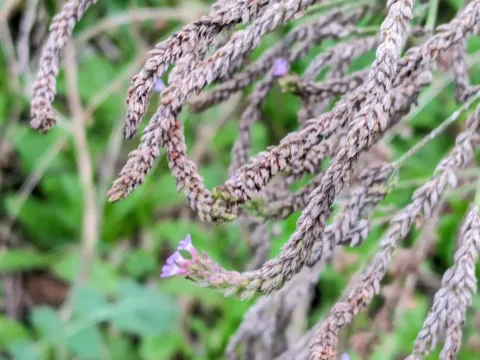
Verbena litoralis
Verbena litoralis
Verbena litoralis is typically propagated through seeds, which require specific conditions for successful germination, including an initial period of cold stratification.
What the section contains
Verbena litoralis
Sowing should be done indoors during late winter or early spring using a sterile and well-draining seed-starting mix to ensure healthy development.
Seedlings need consistent temperature levels around 20-22 degrees Celsius and bright ambient light to prevent leggy growth during the early stages.
Transplanting into the garden environment must only occur once all risks of frost have passed and soil temperatures have sufficiently increased.
Spacing between individual plants should be carefully planned at approximately 30-40 centimeters to accommodate mature growth and air circulation.
Belonging to the Verbenaceae family, Verbena litoralis thrives best in locations that receive full sun exposure for the majority of the day.
The ideal soil composition should be fertile, light, and enriched with organic matter, ensuring that the roots do not sit in waterlogged conditions.
pH levels of the soil should be maintained near neutral, as this balance promotes efficient nutrient uptake and overall plant vitality.
Watering practices should be balanced, providing moisture when the top layer of soil becomes dry while avoiding excessive saturation of the root system.
Regular fertilization with balanced nutrients during the active growing season will help maintain healthy leaves and support the production of floral stalks.
Powdery mildew is a common fungal challenge for Verbena litoralis, particularly in environments with high humidity or poor air movement around the foliage.
Root rot pathogens can cause significant damage if the soil drainage is inadequate, leading to the rapid decline of the entire plant population.
Insect pests such as aphids and spider mites are frequent visitors that can weaken the plant by feeding on its sap and leaves.
Integrated pest management, including the use of neem oil or targeted biological controls, is effective in maintaining plant health throughout the season.
Maintaining a clean growing area by removing debris and weeds helps minimize the habitat for pests and the spread of plant diseases.
Harvesting Verbena litoralis for medicinal or essential oil purposes is most effective during the peak flowering stage when plant compounds are concentrated.
The aerial parts are harvested using sharp, clean tools to ensure precise cuts and minimize stress to the remaining root structure of the plant.
Post-harvest processing involves drying the plant material in a dark, well-ventilated space to protect the integrity of the essential oils.
Storage should be conducted in airtight containers kept away from direct sunlight to preserve the potency and quality of the harvested produce.
Proper management of the harvesting cycle allows for consistent yield and supports the long-term health of the crop in subsequent growth periods.