
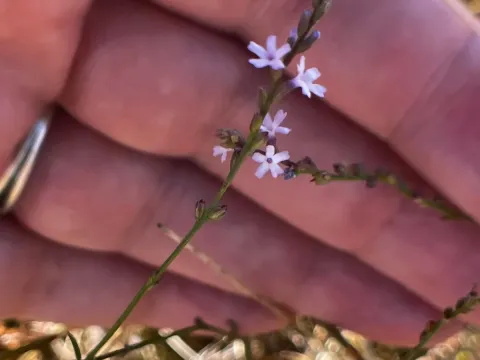
Verbena gracilescens
Verbena gracilescens
Verbena gracilescens belongs to the Verbenaceae family and is primarily cultivated as an ornamental flowering plant. Propagation is typically achieved through seeds, requiring an early start indoors to ensure robust plant development before transplanting.
What the section contains
Verbena gracilescens
Seed sowing is recommended for late February or early March. The seeds benefit from a period of cold stratification, which helps break dormancy and promotes more uniform germination rates once the seeds are moved to warmer conditions.
Use a well-draining, sterile potting mix for sowing. Seeds should be pressed lightly into the soil surface and covered thinly with fine substrate. Maintaining a steady humidity level using a plastic cover is essential until the emergence of the first true leaves.
Optimal germination temperatures are between 20 and 22 degrees Celsius. Once seedlings appear, provide ample light to prevent them from becoming spindly, which can compromise the structural integrity and health of the young plants.
Transplanting into the garden should occur only after the danger of late spring frost has completely passed, typically in late May. Proper hardening off of the seedlings over a period of 7–10 days before planting is crucial for successful establishment.
Verbena gracilescens is a sun-loving plant that performs best in full sunlight, receiving at least six to eight hours of direct exposure daily. Insufficient light leads to stunted growth, reduced flower production, and poor overall plant vigor.
Soil requirements involve well-drained, fertile ground with a slightly acidic to neutral pH level. While the plant can tolerate a variety of soil types, it absolutely refuses to thrive in heavy, waterlogged clay soils that promote root rot.
Irrigation should be consistent but moderate. During peak summer heat, regular deep watering is required to maintain soil moisture, yet it is imperative to allow the top layer of soil to dry out between watering sessions to avoid fungal issues.
Fertilization with a balanced, slow-release fertilizer is recommended at the start of the growing season. Excessive nitrogen should be avoided as it encourages vegetative growth at the expense of floral development, which is contrary to the plant's ornamental purpose.
Regular maintenance, including light pruning of spent flower heads, encourages a second flush of blooms and keeps the plant looking tidy. Keeping the surrounding area free of weeds is also important to prevent competition for nutrients and water.
The primary threats to Verbena gracilescens include powdery mildew and root rot, both of which are exacerbated by high humidity and poor air circulation. Proper spacing between plants is the most effective preventative measure against these fungal issues.
Common insect pests include aphids and spider mites, which can sap the plant's energy and damage foliage. These pests can be managed through the application of insecticidal soaps or systemic pesticides if an infestation is detected early.
Root rot, a major concern in overly wet soils, requires immediate attention. If symptoms appear, reducing irrigation and improving soil drainage are critical steps, along with the application of appropriate soil fungicides if necessary.
Maintaining high hygiene standards in the garden, such as clearing away debris and dead plant matter, helps reduce the population of overwintering pests and fungi. This simple practice significantly lowers the risk of disease outbreaks.
Integrated pest management, combining cultural practices like correct watering and sanitation with chemical or biological controls only when necessary, ensures the healthiest growth and the most vibrant floral display for this species.