
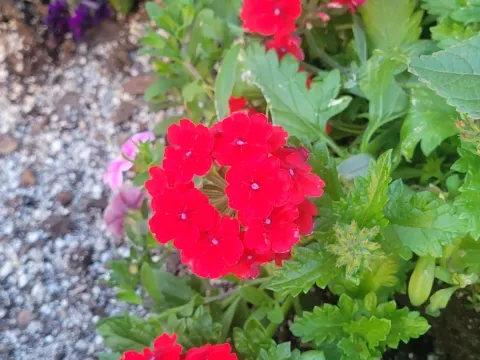
Verbena hybrida
Verbena hybrida
Verbena hybrida belongs to the Verbenaceae family and is widely valued as a popular annual ornamental plant. Seeds are typically started indoors in late winter, about 8 to 10 weeks before the last expected spring frost, to ensure early blooming.
What the section contains
Verbena hybrida
The seeds have a hard seed coat, so a short period of stratification (chilling) in a refrigerator can improve germination rates significantly. They should be sown in a sterile seed-starting mix, barely covered with soil, and kept in a warm, humid environment.
Once seedlings develop their first true leaves, they should be transplanted into individual pots or cell trays. Providing ample light during this stage is crucial to prevent the seedlings from becoming leggy and weak before their final planting.
Transplanting into the garden occurs only after all danger of frost has passed and soil temperatures have warmed up. Plants are typically spaced 20–30 cm apart to ensure good air circulation, which is essential for long-term health.
Verbena is a slow starter, so patience is required during the initial growth phase. Once established in the garden, the plants grow rapidly, forming lush, colorful mounds of foliage and flowers.
Verbena hybrida thrives in full sun, requiring at least 6 to 8 hours of direct sunlight daily to produce high-quality blooms. Inadequate light results in reduced flowering and a sparse growth habit.
The plant prefers well-drained, fertile soil with a neutral pH level. It is highly intolerant of waterlogged soil, which leads to root rot and other physiological issues; therefore, drainage is the top priority when preparing the planting site.
While somewhat drought-tolerant once established, verbena performs best with regular watering during dry spells. Fertilizer applications containing balanced nitrogen, phosphorus, and potassium support continuous flowering throughout the growing season.
Botanically, Verbena hybrida is characterized by its hairy, branching stems and serrated leaves. The flowers are arranged in dense terminal spikes or clusters, displaying a wide variety of colors, including shades of blue, purple, pink, red, and white.
The cultural use of this plant is diverse, ranging from bedding and border designs to hanging baskets and containers. Its ability to withstand high summer heat makes it an excellent choice for sunny garden settings.
Powdery mildew is the most common fungal disease affecting verbena, often appearing as a dusty white substance on leaves and stems. Maintaining proper airflow and avoiding overhead irrigation can help reduce the risk of this infection.
Root rot caused by pathogens like Pythium or Phytophthora can be devastating if the soil remains excessively moist. Preventing such diseases requires strict attention to soil drainage and avoiding over-watering.
Aphids are frequent pests that feed on the sap of tender new growth, often causing leaf curling and stunted development. If infestations occur, horticultural soaps or suitable insecticides should be applied.
Spider mites are notorious for attacking plants during hot, dry periods, causing yellowing and webbing on the foliage. Monitoring the undersides of leaves is essential for detecting mite activity early.
Leaf miners can create tunnels within the leaf tissue, damaging the photosynthetic area. While usually not fatal, severe infestations can significantly diminish the plant's aesthetic value and should be treated by removing affected leaves.