
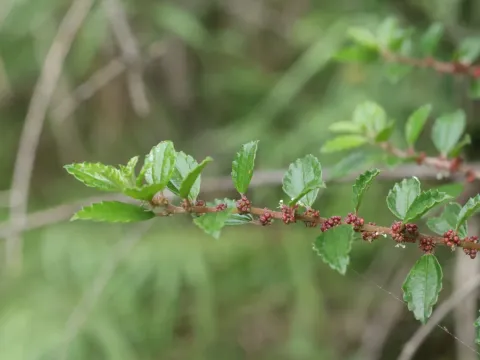
Pouzolzia
Pouzolzia
Pouzolzia is a thermophilic crop, making the sowing timing highly dependent on soil temperature. The optimal planting period begins once the soil at seed depth consistently reaches temperatures of 15–18 degrees Celsius.
What the section contains


Pouzolzia
In tropical and subtropical climates, which serve as the natural habitat for the Pouzolzia genus, sowing is typically conducted at the start of the rainy season. This timing ensures sufficient soil moisture for seed germination and early root development.
For commercial production, seeds are sown in rows. The spacing between rows is determined by the expected size and growth habits of the specific variety. Given the small size of the seeds, shallow planting followed by light compaction is necessary to ensure optimal soil-seed contact.
Preparing a proper seedbed is critical for success. The field must be level and free from competing weeds, as Pouzolzia is sensitive to competition for light and nutrients during the initial seedling stage.
Agronomists recommend planting during periods of maximum solar radiation, as the crop requires high light intensity to promote the development of strong, fibrous stems.
Belonging to the Urticaceae family, Pouzolzia has specific cultivation requirements. It thrives in fertile, well-drained loamy soils with a pH ranging from neutral to slightly acidic.
The plant is highly intolerant of waterlogging in the root zone, which can lead to rapid decay. However, it requires a steady supply of moisture throughout its vegetative growth phase to maintain productivity.
The ideal temperature range for stable growth is between 22 and 30 degrees Celsius. Pouzolzia is highly sensitive to frost and significant temperature fluctuations, which effectively limits its commercial cultivation to tropical and subtropical regions.
To produce high-quality bast fiber, the crop requires relatively high atmospheric humidity. In arid conditions, the fibers tend to become brittle and lose their desirable spinning properties.
Maintaining soil fertility through the application of organic amendments or balanced mineral fertilizers is an essential agronomic practice to ensure high biomass yields and long, robust stems.
The yield of Pouzolzia is measured primarily by the output of dry bast fiber per hectare. With proper agronomic management, the crop is capable of producing significant biomass volumes comparable to other technical fiber plants.
Peak yields are achieved when nutrient management and moisture levels are optimized during the period of intensive vegetative growth. The quality of the fiber, specifically its length and tensile strength, is as important as total biomass.
The biological nature of perennial Pouzolzia species allows for multiple harvests within a single growing season if water management is properly controlled, significantly enhancing the economic efficiency of the operation.
To maximize fiber quality, high planting density is employed to suppress lateral branching and encourage the growth of long, uniform stems. This prevents the formation of nodes and knots that decrease fiber value.
While seed production is possible, it is generally a secondary objective. In fiber-focused plantations, specific areas are set aside for seed maturation, while the primary crop is harvested before seed set to ensure maximum fiber quality.
The primary threats to Pouzolzia include soil-borne fungal diseases triggered by excessive soil moisture. Prevention strategies focus on improving drainage systems and strictly managing irrigation schedules.
Sucking insects, such as aphids and spider mites, represent the most significant pest threats. They cause damage to young leaves and stems, leading to stunted growth and reduced photosynthesis.
High humidity conditions may also encourage the development of powdery mildew, which appears as a white coating on the leaves. Timely application of systemic fungicides is an effective control measure.
Weed management is critical during the first few weeks after emergence. Mechanical weeding or mulching between rows is essential to protect the young plants from nutrient and light competition.
Integrated pest management (IPM) programs are recommended, combining preventive phytosanitary measures with the use of low-toxicity pesticides only when economic thresholds are exceeded.
Pouzolzia is harvested at the stage of technical maturity, when the fiber content and quality in the stems reach their peak. Experts monitor morphological changes in the stem to determine the precise window for harvest.
Mechanical harvesting is the standard practice for large-scale operations. After cutting, the biomass undergoes primary processing, which may involve drying, retting, or mechanical stripping to separate the bast fiber from the woody core.
Harvesting must be completed before the onset of lignification, as older stems yield coarse, low-quality fibers that are difficult to process in textile manufacturing facilities.
Modern commercial plantations utilize specialized harvesters designed for bast fiber crops, ensuring efficiency and maintaining the length and integrity of the stalks during collection.
Post-harvest processing includes thorough drying in well-ventilated areas to prevent the degradation of organic tissues and the proliferation of mold, which would otherwise compromise fiber strength.