
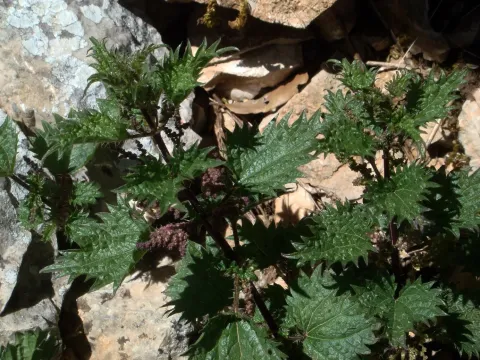
Dark nettle
Urtica atrovirens
Dark nettle (Urtica atrovirens) is a perennial herbaceous plant belonging to the Urticaceae family. This species is native to the western Mediterranean, showing a restricted distribution in regions like Corsica, Sardinia, and the Balearic Islands.
What the section contains
Dark nettle
The plant thrives in moist, shaded environments, often utilizing nitrogen-rich soils found in rocky crevices or at the base of old walls. In agricultural settings, it requires locations that mimic these cool and humid conditions.
For successful production, the climate must be temperate without extreme fluctuations in temperature. Ideally, the plant prefers consistent moisture levels and protection from intense direct sunlight, which can cause leaf scorch and dehydration.
Soil quality is paramount; it should be well-drained but capable of holding moisture. Providing regular nitrogen fertilization ensures the rapid vegetative growth required for economic harvest of the biomass.
Botanically, it is distinguished from other nettles by its dark green foliage and specific serration patterns on the leaves. The presence of stinging trichomes is a significant evolutionary trait that protects the plant from herbivory.
Harvesting dark nettle is typically carried out before the onset of the flowering stage. At this point, the leaf tissues contain the highest concentrations of nutrients, making the crop most valuable for medicinal and industrial processing.
Mechanical harvesting requires specialized equipment to handle the biomass effectively. Because of the stinging hairs, workers or machines must use protective gear to ensure safety and prevent irritation during the handling of raw materials.
Post-harvest management involves controlled drying processes. Using forced-air dryers set to low heat helps retain the integrity of the plant's essential oils and chemical constituents, which are vital for pharmacological applications.
The plant has diverse uses in modern industry, ranging from potential textile fiber production to being a source of natural pigments. Its adaptability makes it an interesting candidate for niche agricultural ventures focusing on Mediterranean flora.
Sustainable farm management includes proper field sanitation after each harvest cycle. Removing decaying plant matter helps maintain the health of the perennial root systems, ensuring vigorous regrowth and consistent yields for subsequent seasons.