
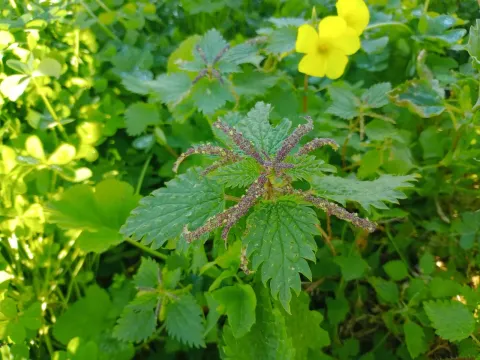
Annual nettle
Urtica membranacea
Annual nettle is a one-year species that depends entirely on seed propagation. The sowing season begins in early spring as soon as the soil temperatures consistently reach 10 degrees Celsius.
What the section contains
Annual nettle
Seeds should be distributed evenly with a spacing of about 40–50 centimeters between rows to ensure proper plant development and facilitate mechanical weeding.
The optimal depth for seeding is approximately 1 to 2 centimeters. Because the seeds are small, it is critical to keep the soil surface moist to ensure a high germination rate.
In large-scale production, precision drills are used to maintain a consistent population density, which is vital for uniform growth and ease of mechanical harvesting.
Direct seeding in the field is the standard method, as transplanting is not economically viable for this species due to its high density requirement.
The plant thrives in fertile, well-drained soils rich in organic matter. Nitrogen-rich substrates are particularly beneficial, as they significantly boost biomass production.
Urtica membranacea is a sun-loving plant, though it can tolerate partial shade in areas with high ambient temperatures, where it benefits from protection against midday heat.
Water requirements are moderate, but consistent moisture is essential during the vegetative phase. Drought stress can lead to stunted growth and early flowering, which reduces the total biomass yield.
The ideal soil pH for this crop ranges from 6.0 to 7.0. Soils with high acidity or alkalinity can negatively affect nutrient uptake and lead to nutrient deficiencies.
Proper field management includes regular soil aeration through cultivation, which prevents crust formation and promotes strong root system development.
The yield of annual nettle is heavily dependent on nitrogen fertilization and moisture levels during the peak growing season in late spring.
Under optimal agricultural management, a yield of 20 to 25 tons of fresh biomass per hectare is achievable. Successive harvests may be possible in regions with long growing seasons.
Harvest timing is critical: the peak concentration of active compounds is found in the foliage just before the flowering stage commences.
Seed yield varies depending on the season, typically ranging between 500 and 750 kilograms per hectare. Proper cleaning is necessary to remove organic debris.
Efficiency in harvesting is improved by keeping the fields free of weeds, which reduces contamination and ensures higher quality of the final raw material.
While relatively robust, annual nettle is susceptible to several insect pests that feed on its leaves and stems, potentially reducing its market value.
Aphids and spider mites are the most common threats, particularly in warm and dry environments where they can multiply rapidly and cause foliage deformation.
Fungal diseases like powdery mildew can become a major concern in high-humidity conditions with poor air circulation, particularly in dense plantings.
Planting in areas with stagnant water or high humidity increases the risk of root rot, which can cause significant crop losses in early stages.
- Implement integrated pest management strategies to control aphid populations.
- Ensure adequate spacing between rows to improve airflow and reduce fungal risks.
- Use biological fungicides as a preventative measure in high-risk areas.
Harvesting should be conducted when the plants have reached their peak vegetative development but before the production of excessive seeds.
The best practice is to harvest during clear weather in the morning after the dew has evaporated, as dry material is less prone to spoilage.
Mechanical harvesting using forage harvesters or mowers is common, ensuring the cutting height is set high enough to avoid soil contamination.
Immediate post-harvest drying is required to prevent fermentation and preserve the natural color and nutritional profile of the harvested biomass.
Seeds are harvested once they have fully matured and turned dark; they are typically threshed using specialized machinery to ensure a clean product.