
Debregeasia saeneb
Debregeasia saeneb
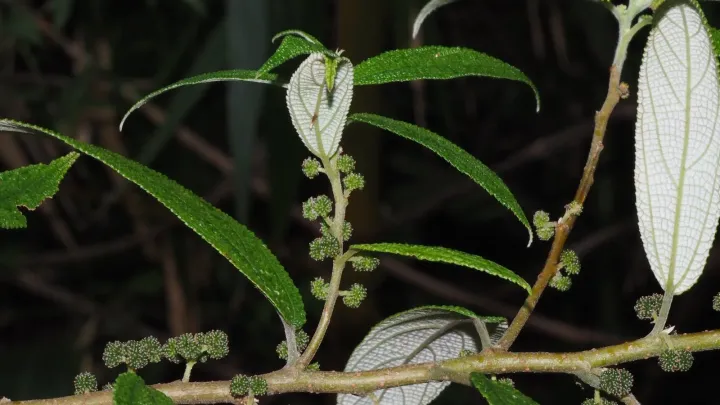
Description
Growing requirements
Debregeasia saeneb is a perennial shrub or small tree belonging to the family Urticaceae. Originating from the Himalayan regions and parts of Southeast Asia, it is well-adapted to mountain environments and high-humidity climates where the temperatures remain relatively mild throughout the year.
The plant thrives in fertile, well-drained soils enriched with leaf mold and organic matter. It prefers areas with consistent rainfall or high atmospheric humidity, making it an ideal candidate for cultivation in shaded or semi-shaded agricultural plots or forest gardens.
For optimal growth, the site must be protected from extreme drying winds. Young plants require regular irrigation during the establishment phase, while mature shrubs are somewhat resilient but produce better fruit and fiber yields if moisture levels are maintained throughout the growing season.
Botanically, this species is noted for its non-stinging leaves and distinctive orange or yellow spherical fruit clusters. These fruits are edible and widely appreciated for their nutritional content, adding value to the plant as both a fruit-bearing crop and a fiber source.
Economically, the species is historically significant for its bast fiber, which is extracted from the bark. This fiber is highly durable and resistant to water, leading to its traditional use in making fishing nets, strings, and high-tensile cords within local agricultural communities.
Main diseases and pests
The main threats to the plant's health include fungal leaf spot diseases that can develop if air circulation around the canopy is restricted. Proper spacing and pruning are essential strategies for maintaining plant vigor and preventing pathogen buildup in humid climates.
Pests that commonly impact the crop include aphids and scale insects, which target the soft tissues of new growth. Integrated pest management, focusing on early detection and the use of insecticidal soaps, is usually sufficient to protect the health of the plants.