
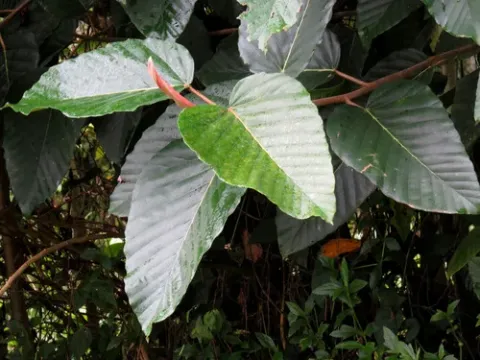
Coussapoa
Coussapoa
The genus Coussapoa belongs to the Urticaceae family. These species are woody plants often characterized by their hemi-epiphytic habit, meaning they often begin their growth cycle high in the canopy of tropical rainforest trees.
What the section contains

Coussapoa
Originating from the tropical regions of Central and South America, these plants are well-adapted to the high-humidity environments of neotropical forests. They possess specialized root systems capable of absorbing moisture and nutrients directly from the air and decaying organic matter.
Climate requirements for Coussapoa include consistent tropical warmth. They thrive in environments where temperatures do not drop significantly and humidity levels remain high throughout the year, mimicking their native rainforest conditions.
Soil requirements focus on high organic content and excellent drainage. Whether grown in containers or in botanical conservatories, the substrate must be airy to prevent root rot, as these plants are highly sensitive to waterlogging around the root collar.
Cultivation techniques involve providing indirect sunlight, as many species are adapted to understory light levels. Regular misting or high-humidity greenhouse systems are essential for maintaining the health of the foliage and promoting robust growth.
Pests such as mealybugs and scale insects represent the most common threat to Coussapoa in greenhouse settings. These insects cluster in the leaf axils, draining sap and leaving behind honeydew that attracts secondary fungal infections.
Fungal leaf spot diseases are frequently caused by poor ventilation and prolonged surface moisture. These pathogens create necrotic lesions on the leaves, which can lead to significant defoliation if left untreated.
Root rot is a critical threat that stems from improper irrigation practices. When the soil medium lacks sufficient structure or the drainage is blocked, anaerobic conditions develop, leading to the rapid decay of the fine root hairs necessary for nutrient uptake.
Mites, particularly spider mites, can become a nuisance during warmer periods when air humidity drops. They cause stippling and yellowing of the leaves, eventually leading to premature senescence and a decline in the plant's overall photosynthetic capacity.
Management strategies involve rigorous sanitation practices, including the removal of dead leaves and the use of insecticidal soaps for pest control. Ensuring optimal air movement around the plant foliage significantly reduces the risk of most airborne fungal threats.