
Baby tears
Soleirolia soleirolii
Description
Growing requirements
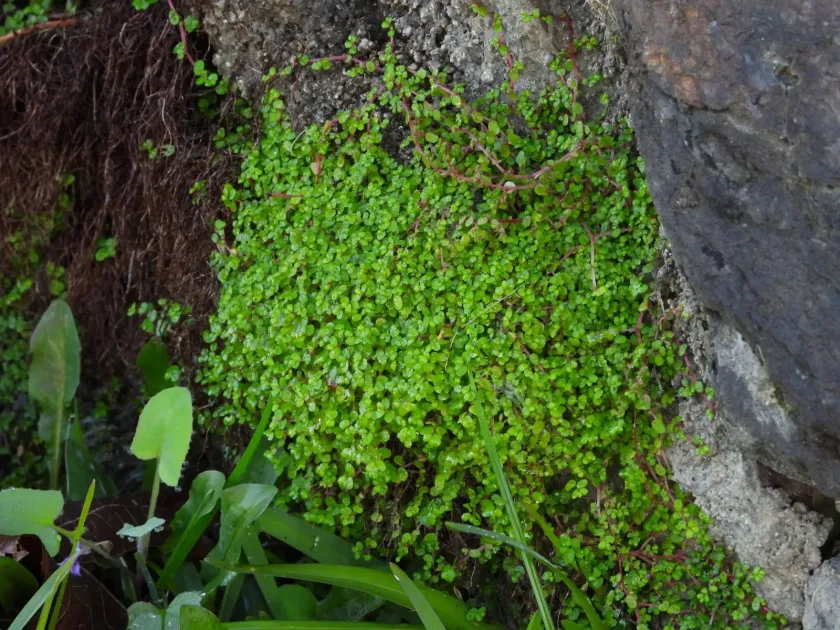
Baby tears (Soleirolia soleirolii), often referred to as helxine, is a low-growing perennial herb belonging to the Urticaceae family. Native to the Mediterranean region, specifically the islands of Corsica and Sardinia, this plant is well-known for its dense, moss-like carpet of tiny, rounded green leaves.
Botanically, it features delicate, thread-like stems that spread horizontally across the soil surface, rooting at the nodes. This structural characteristic allows it to colonize available space rapidly, making it a popular choice for terrariums and as an underplanting for larger potted specimens.
Successful cultivation requires a consistently moist environment. Unlike many other houseplants, baby tears cannot tolerate drying out; the soil must remain damp at all times, and the plant appreciates high humidity levels, which can be achieved through regular misting or humidity trays.
Light requirements for Soleirolia include bright, indirect sunlight. Exposure to direct afternoon sun should be strictly avoided as it can cause the tender foliage to scorch and turn brown. A north-facing window typically provides the most favorable balance of light intensity for this species.
The ideal potting medium should be a peat-based, well-draining mixture that retains moisture without becoming waterlogged. Regular fertilization with a balanced, diluted liquid fertilizer during the growing season is recommended to maintain the plant's lush, vibrant appearance.
Main diseases and pests
The primary health issue for baby tears is root rot, typically caused by waterlogged soil and poor drainage. Once the roots begin to decay, the stems will collapse and die back, often necessitating the propagation of healthy cuttings to replace the damaged portions of the plant.
Pest issues are usually limited to spider mites and mealybugs, which thrive in dry indoor air. Maintaining high humidity is the best preventive measure, though insecticidal soap can be used if an infestation occurs to manage the population effectively.