
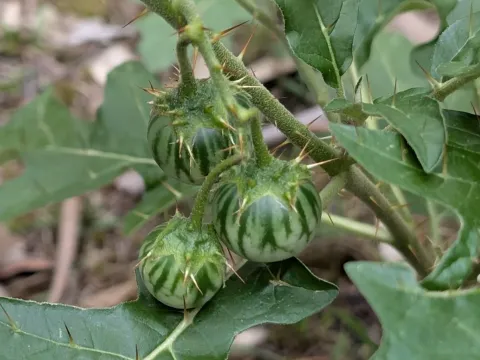
Narrawa burr
Solanum cinereum
Narrawa burr (Solanum cinereum) is a herbaceous perennial belonging to the Solanaceae family. This species is easily identified by the dense covering of sharp spines on its stems and leaves, which acts as a deterrent against herbivores.
What the section contains
Narrawa burr
The plant is native to Australia, where it has evolved to thrive in arid and semi-arid environments. Its biological structure is highly adapted to tolerate extreme heat and water scarcity.
The species requires well-drained soil and high levels of direct solar radiation to maintain its metabolic activities. It displays significant resilience in degraded soil conditions where other species might fail.
Agronomically, this plant is considered a problematic species that requires rigorous management in agricultural settings due to its thorns and potential to outcompete crops for nutrients and sunlight.
Soil management for Solanum cinereum focuses on maintaining low moisture levels in the root zone to discourage aggressive growth, as it prefers well-aerated soil profiles.
Solanum cinereum faces pressure from various pests that have developed biological mechanisms to bypass the plant's chemical defenses, such as alkaloids.
Defoliating insects, including specific species of beetles, pose a major threat by consuming large portions of leaf tissue, which inhibits the plant's photosynthetic capacity.
Fungal pathogens such as Verticillium or Fusarium wilts can infect the vascular system, causing rapid decline and plant death under humid conditions.
Aphids represent a constant threat, not only for direct feeding but primarily as vectors for various mosaic viruses that severely stunt growth and development.
Effective management strategies often involve integrated pest management (IPM) practices, combining biological control agents with selective chemical treatments to manage infestations.