
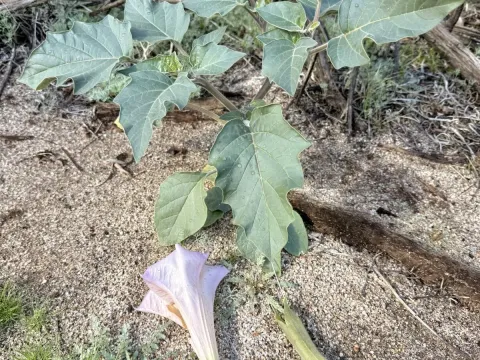
Sacred datura
Datura wrightii
Sacred datura (Datura wrightii) is a perennial member of the Solanaceae family, typically grown as an annual in cooler climates. Propagation is performed by sowing seeds indoors in late winter to ensure a long growing season for the plants.
What the section contains
Sacred datura
The seeds require consistent temperatures between +20°C and +25°C for successful germination. Sowing at a depth of 0.5 to 1 cm into a well-draining, sterile potting mix is recommended to prevent early fungal infections.
Seedlings should be transplanted into individual containers once the first set of true leaves develops. Providing ample light is essential during this stage to prevent the plants from becoming leggy and weak.
Before transplanting into the garden, seedlings must be hardened off for approximately one week to acclimate them to outdoor conditions. Planting outside should only occur after the danger of frost has passed.
Spacing is a critical factor for success; each plant needs at least 60 to 80 cm of space to accommodate its robust growth habit and wide, bushy spread during the peak summer months.
This species thrives in full sun exposure. While it can tolerate partial shade, maximum sunlight is necessary to achieve the most profuse blooming and optimal physiological health of the plant.
Soil requirements are relatively flexible, but the plant performs best in well-draining soils with a neutral or slightly alkaline pH. Heavy clays should be amended with organic matter to improve drainage.
Although Datura wrightii is moderately drought-tolerant once established, supplemental irrigation is required during dry spells. Consistent moisture levels promote faster growth and larger floral displays.
Fertilization should be balanced, utilizing a low-nitrogen fertilizer during the flowering phase to prevent excessive foliage development at the expense of floral production. Potassium-rich feeds help strengthen stems.
The plant prefers warm environments and is sensitive to temperatures below +10°C. In regions with short growing seasons, it is often grown in containers, which allows for easier movement into sheltered areas during cold snaps.
Spider mites represent a significant threat during periods of high heat and low humidity. Regular inspection of the undersides of leaves is recommended to detect early infestations and allow for timely intervention.
Aphids are common pests that feed on the sap of young shoots and buds. Biological control agents or insecticidal soaps are typically effective enough to manage these populations without damaging the plant.
Root rot is a common issue caused by overwatering or poor soil drainage. Ensuring that the site is well-drained and that the soil surface dries out slightly between watering sessions is essential for prevention.
Caterpillars can cause significant leaf damage, necessitating manual removal or the application of Bacillus thuringiensis if the infestation becomes heavy enough to compromise the plant's health.
Viral infections, often transmitted by sap-sucking insects, can manifest as leaf mosaic or stunting. Preventing the spread of pests and maintaining vigorous plant health are the best defenses against such diseases.