
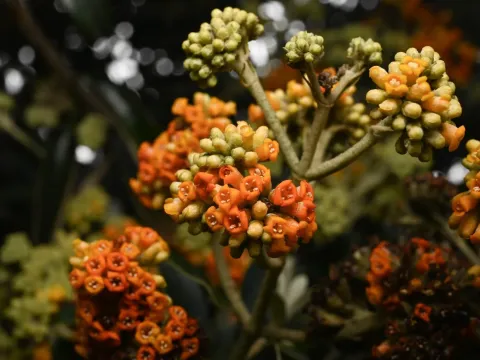
Buddleja coriacea
Buddleja coriacea
Buddleja coriacea, often referred to as a leatherleaf buddleia, is a evergreen shrub belonging to the Scrophulariaceae family. It is native to the high-altitude regions of the Andes, thriving in the harsh environments of Peru and Bolivia at elevations up to 4500 meters.
What the section contains
Buddleja coriacea
This species is exceptionally well-adapted to high-altitude stress factors, including extreme solar radiation and significant diurnal temperature variations. Its thick, leathery leaves covered with a dense indumentum are specialized features that prevent excessive water loss.
Agricultural requirements for Buddleja coriacea center on excellent soil drainage and exposure to full sun. While it can survive in nutrient-poor, rocky substrates, providing a stable, well-draining soil environment is essential for optimal development.
The growth rate of this shrub is naturally slow, reflecting its alpine origin. Farmers and horticulturists must plan for a multi-year development cycle, as the plant prioritizes root system establishment before significant biomass accumulation occurs above ground.
Economically, the plant is highly valued for its dense, durable wood, which has been used historically for tools and construction. Furthermore, it plays a vital role in preventing soil erosion on steep slopes and provides medicinal extracts used in traditional practices.
The most common threat to Buddleja coriacea under cultivation is the development of root rot, typically caused by waterlogged soil. Proper soil management and the installation of drainage systems are critical to preventing fungal pathogens from compromising the health of the plant.
Aphids and spider mites are frequent pests, particularly in greenhouses or under drought conditions. Regular inspection and the use of integrated pest management (IPM) strategies, such as biological controls, are recommended to protect the foliage.
Weed competition presents a significant challenge during the plant's juvenile stage. Because of its slow growth, Buddleja coriacea cannot compete effectively with aggressive weeds, necessitating manual weeding and the use of protective mulch.
Excessive moisture during periods of low temperature increases the plant's susceptibility to diseases. Monitoring the microclimate of the planting site is essential, as stagnant, humid air can promote the spread of pathogens.
Over-harvesting in the wild and loss of natural habitat represent major external threats to the species' long-term stability. Sustainable cultivation techniques are necessary to reduce pressure on wild populations and preserve the genetic diversity of the plant.