
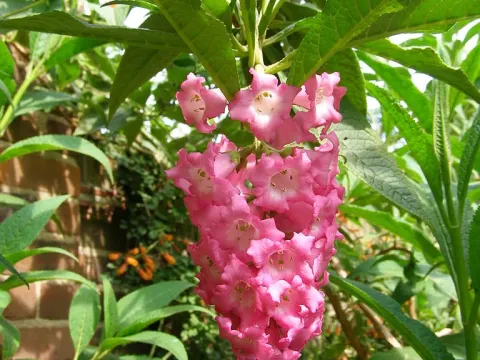
Buddleja colvillei
Buddleja colvillei
Buddleja colvillei is an exquisite deciduous shrub belonging to the Scrophulariaceae family, originating from the mountainous regions of the Himalayas. It is characterized by its distinctively large, pendulous panicles of flowers that set it apart from other species in the genus.
What the section contains
Buddleja colvillei
This species requires a warm, sunny position protected from harsh winds to thrive. It performs best in well-drained, moderately fertile soil with a neutral to slightly acidic pH level, as it is highly sensitive to waterlogged conditions that cause root suffocation.
Climate adaptation is a key factor, as this plant is not fully hardy in temperate zones. In colder regions, it requires a sheltered south-facing wall or specialized winter protection to prevent damage to its woody stems during sub-zero temperatures.
Cultural practices should include annual pruning in early spring to remove dead wood and encourage the development of new flowering shoots. Watering should be regular during the active growing season, ensuring the root zone remains moist but never saturated.
In landscaping, Buddleja colvillei is used as a high-status ornamental specimen. Its structural beauty makes it suitable for large garden borders or as a focal point in a conservatory where winter temperatures can be controlled.
The primary pests affecting this shrub are spider mites and aphids, which feed on the sap of tender new foliage. Infestations should be monitored frequently, and appropriate acaricides or insecticidal soaps should be applied at the first sign of pest activity.
Root rot caused by waterlogged soil is the most serious threat to the longevity of the plant. Ensuring excellent drainage through the addition of grit or organic matter to the planting hole is the most effective preventative measure.
Powdery mildew is a common fungal disease that affects the leaves, especially in stagnant or humid conditions. Proper plant spacing and avoiding overhead irrigation can significantly reduce the incidence of this infection.
Whiteflies are also known to attack the shrub, particularly in sheltered environments or greenhouse conditions. Integrated pest management, including the use of sticky traps and beneficial insects, is recommended for long-term control.
Chlorosis, indicated by yellowing leaves between the veins, may occur if the soil pH is too high, hindering nutrient uptake. Regular monitoring of soil health and using chelated iron treatments can help maintain vibrant foliage color.