
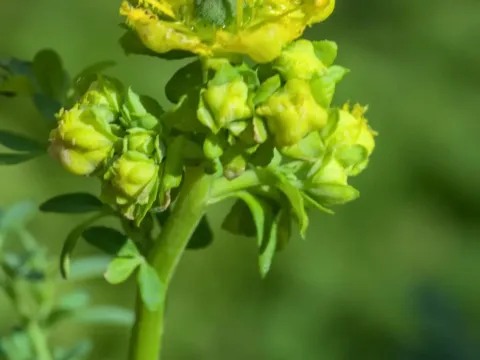
Fringed rue
Ruta chalepensis
Ruta chalepensis, commonly known as fringed rue, is propagated primarily by seeds. For optimal germination, it is recommended to start seeds indoors in late winter, providing a stable temperature between 20 and 22 degrees Celsius.
What the section contains
Fringed rue
Direct seeding in the field is possible in warmer regions once the threat of frost has passed. Seeds should be sown at a shallow depth of approximately 0.5 to 1 centimeter, ensuring consistent soil moisture throughout the germination period.
For commercial production, a planting distance of 45–60 centimeters between rows is advised. This spacing allows for adequate airflow around the plants, which is crucial for preventing fungal diseases in the humid canopy.
Seedlings should be thinned when they reach a height of 5–8 centimeters to ensure that each plant has enough space to develop a strong root system. Proper spacing prevents resource competition and promotes uniform growth across the plantation.
The use of high-quality, stratified seeds is essential for achieving a high success rate in field emergence. Proper seedbed preparation is equally important to facilitate rapid root establishment after sowing.
As a member of the Rutaceae family, fringed rue thrives in Mediterranean-type climates, characterized by hot, dry summers and mild, wet winters. It is an evergreen subshrub that demands full sun exposure to maintain its high oil content.
The crop is well-adapted to poor, rocky, or sandy soils, provided they are well-drained. It is highly sensitive to waterlogged conditions, which can quickly lead to root rot and eventual plant failure during the growing season.
While known for its drought tolerance once established, periodic irrigation during the peak flowering stage will significantly increase the yield of biomass. However, over-watering should be strictly avoided at all stages.
The ideal soil pH for Ruta chalepensis ranges from 6.5 to 7.5. In soils with high acidity, the application of agricultural lime may be necessary to correct the pH levels and promote healthy nutrient uptake by the plants.
Maintenance of soil fertility through moderate organic or mineral fertilization is recommended. Phosphorus and potassium are particularly important for stimulating early growth and improving the overall hardiness of the shrub.
Yield estimation for fringed rue is based on the harvested dry matter, which usually reaches its maximum potential from the second to the fourth year of cultivation. A single plantation can remain productive for up to 6 years.
To ensure high quality, the harvest should coincide with the onset of the flowering phase. This timing is critical because the chemical profile of the essential oil is most potent when the plant begins to transition from vegetative to reproductive growth.
Average yield figures can vary based on regional climate and management intensity. With proper pruning practices and consistent management, growers can expect two harvests per season in regions with longer growing periods.
The biomass harvested consists of leaves and flowering tops, which are rich in active secondary metabolites. Effective collection involves selecting only the healthy upper foliage, avoiding woody stems that add weight but contain lower concentrations of oils.
Regular rejuvenation pruning after the harvest season keeps the plants productive and prevents them from becoming overly woody or sparse. This management practice is key to sustaining yield over the long term.
Ruta chalepensis is relatively resistant to many common pests due to its pungent aroma and chemical composition. However, it is not immune to diseases, with root rot being the most significant threat in poorly drained soils.
Aphids and spider mites may occasionally infest the tender young leaves, particularly during warm and arid spells. Integrated pest management, including the use of beneficial insects, is preferred over synthetic pesticides to preserve the purity of the product.
Powdery mildew is a potential threat when plants are grown in high-humidity areas or planted too densely. Proper spacing and the elimination of weeds are the primary cultural methods to mitigate the risk of fungal spread.
Nematode infestations can pose a problem in plots that have been used for the same crop over many consecutive years. Implementing a crop rotation strategy is an effective way to manage these soil-borne pathogens.
Monitoring the plantation for yellowing leaves or stunted growth is crucial for early detection. Prompt removal of infected plants can prevent the spread of disease across the entire field.
The harvesting process for fringed rue should take place on dry mornings after the dew has evaporated. This ensures that the essential oil content remains stable and that the harvested material is not prone to post-harvest decay.
Mechanical harvesting is feasible for large-scale operations. It is important to adjust the cutting height to ensure that enough foliage remains on the plant for rapid recovery and to prevent stress to the root system.
Immediately after cutting, the material should be transported to a drying facility. Proper airflow is essential during the drying process to prevent mold and to preserve the delicate aromatic compounds within the leaves.
- Drying at temperatures below 40 degrees Celsius maintains the best oil profile.
- The product should be stored in cool, dark, and airtight containers to prevent oxidation.
- Proper storage ensures that the medicinal properties are preserved until the final distillation or usage.
Once the season ends, the field should be cleared of debris to prepare the plantation for its dormant stage. A light fertilization can help the plants recover before entering the winter period.