
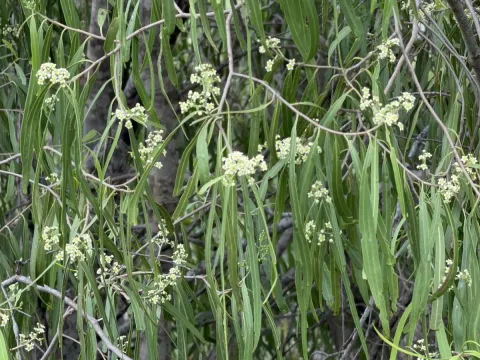
Geijera
Geijera
Geijera is a genus of evergreen trees and shrubs belonging to the Rutaceae family. The most prominent species, Geijera parviflora, commonly known as the Australian willow, is highly valued for its elegant, drooping canopy and its exceptional resilience to harsh environmental conditions.
What the section contains


Geijera
The natural range of the species encompasses Australia and parts of Oceania, where it thrives in diverse climate zones, from dry woodlands to open savannas. The plant is perfectly adapted to hot, arid climates and demonstrates remarkable drought tolerance once the root system is well-established.
For successful cultivation, Geijera requires sunny locations with excellent light exposure, although young saplings may tolerate light shade. The plant prefers loose, well-draining soils with a neutral to slightly alkaline pH. Waterlogging is a critical factor that can rapidly lead to root rot and plant death.
This crop exhibits high tolerance to soil salinity, making it an excellent candidate for urban greening projects and landscaping in areas with challenging soil conditions. In mild climates, Geijera maintains its decorative foliage year-round, serving as a focal point in landscape design.
Agricultural management involves moderate irrigation during the initial years of growth while the plant develops its deep taproot system. Once mature, Geijera requires minimal maintenance, mostly restricted to occasional sanitary pruning and light shaping to encourage a dense canopy structure.
Primary diseases affecting Geijera are typically linked to excessive soil moisture, which creates favorable conditions for root rot and various fungal pathogens like Phytophthora. It is crucial to strictly monitor irrigation schedules and ensure the use of substrates with superior drainage capabilities.
Pests that occasionally impact the crop include insects common to the Rutaceae family, such as scale insects, aphids, and mealybugs that feed on sap. During dry spells, spider mites may become a localized problem, necessitating the use of specialized acaricides if infestations occur.
For pest management in commercial or ornamental settings, preventive spraying with systemic insecticides is recommended. Maintaining optimal soil aeration is equally important to discourage the presence of subterranean pests that might target the root system.
In open-ground conditions, Geijera rarely suffers from major pest outbreaks due to the natural repellent properties of the essential oils present in its leaves. Nevertheless, consistent phytosanitary monitoring remains a fundamental part of standard agricultural practice for this species.
Upon detection of any disease or pest activity, affected parts of the plant should be removed immediately to prevent secondary spread to healthy individuals. A proactive and integrated pest management approach ensures the long-term health and vigor of Geijera in its environment.