
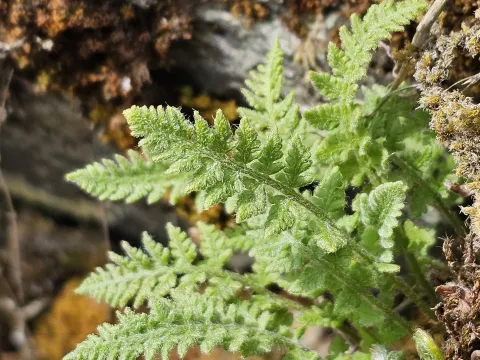
Rusty Woodsia
Woodsia ilvensis
The Rusty Woodsia (Woodsia ilvensis) is a perennial fern belonging to the Woodsia family. It is a highly resilient species, adapted to harsh environments, naturally occurring across the northern regions of the Northern Hemisphere, including the Arctic and alpine zones.
What the section contains
Rusty Woodsia
Botanically, this fern is recognized by its small, tufted form and the dense, reddish-brown hairs that cover its leaves. This distinctive pubescence is an evolutionary adaptation that helps the plant retain moisture and withstand extreme temperature fluctuations.
In a horticultural setting, the plant thrives in conditions that mimic its wild habitat. It is ideally suited for rock gardens, stone walls, or crevices where it can grow in mineral-rich, stony, and well-draining substrates.
Successful cultivation requires a site with excellent drainage, as the plant is highly intolerant of waterlogged soil. It prefers sites that are open to light but can tolerate partial shade, provided the air circulation is sufficient.
Maintenance is relatively straightforward but requires patience, as the species grows quite slowly. It does not require frequent fertilization and, in fact, performs best in nutrient-poor, gritty soils where it faces minimal competition from faster-growing vegetation.
The most significant threat to the Rusty Woodsia is root rot, triggered by poor drainage and excessive moisture. Overwatering is the primary cause of plant failure, making the selection of a porous growing medium critical for long-term survival.
The fern is relatively resistant to common pests, but it can occasionally attract slugs in overly damp conditions. Applying crushed stone mulch around the crown can serve as a physical barrier and improve drainage around the base.
Competition from weeds and invasive grasses is a major hazard to this slow-growing fern. If not cleared, surrounding vegetation will quickly smother the plant, leading to stunted growth or decline due to lack of airflow.
Leaf spot diseases may occur if the plant is forced to grow in environments with high humidity and insufficient sunlight. Proper positioning in an open, well-ventilated garden area is the best preventive measure against these fungal issues.
Given the plant's sensitivity to disturbance, it is rarely susceptible to large-scale insect infestations. Routine garden monitoring and manual removal of encroaching weeds are sufficient to maintain the health and vigor of the specimen.