
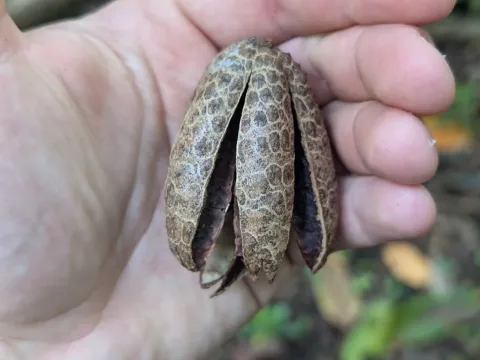
Flindersia
Flindersia
Flindersia is a genus of trees belonging to the Rutaceae family. These trees are well-regarded in forestry for producing high-quality, durable timber, often referred to in trade as Australian maple or silkwood, depending on the specific species.
What the section contains
 Flindersia australis
Flindersia australis
Flindersia australis
 Flindersia bourjotiana
Flindersia bourjotiana
Flindersia bourjotiana
 Flindersia brayleyana
Flindersia brayleyana
Flindersia brayleyana
 Flindersia dissosperma
Flindersia dissosperma
Flindersia dissosperma
 Flindersia ifflaiana
Flindersia ifflaiana
Flindersia ifflaiana
 Flindersia maculosa
Flindersia maculosa
Flindersia maculosa
 Flindersia pimenteliana
Flindersia pimenteliana
Flindersia pimenteliana
 Flindersia schottiana
Flindersia schottiana
Flindersia schottiana
 Yellow-wood
Flindersia xanthoxyla
Yellow-wood
Flindersia xanthoxyla
Flindersia
Native to tropical and subtropical regions, including Australia, New Guinea, and New Caledonia, these trees thrive in moist forest environments. They are known for their impressive height and straight trunks, which are highly valued in the wood processing industry.
The cultivation of Flindersia requires deep, well-drained, and nutrient-rich soils. While they are adaptable to various tropical soil types, stagnant water must be avoided to prevent root rot, which is a common issue for many rainforest species in plantation settings.
Optimal growth occurs in warm, humid climates with year-round temperatures that stay well above freezing. Adequate rainfall is essential for maintaining the growth rate, especially during the establishment phase of the plantation when the trees are most vulnerable.
Silvicultural management includes careful spacing to ensure each tree receives sufficient sunlight, which promotes a straight bole. Young saplings require diligent weed control as they are often outcompeted by fast-growing pioneer species in tropical settings.
The primary economic output of Flindersia is its premium timber. It is widely used in cabinet making, high-end furniture, boat building, and the manufacturing of musical instruments due to its aesthetic grain patterns and structural integrity.
Significant threats include wood-boring insects which can compromise the structural quality of the timber. Furthermore, improper drainage in plantation areas can lead to fungal infections, causing root system decay and reducing the overall vigor of the trees.