
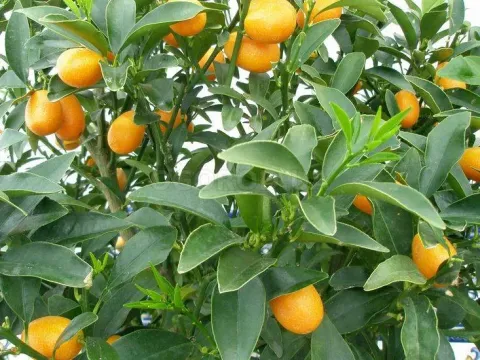
Fortunella
Fortunella
Fortunella, commonly known as kumquat, belongs to the Rutaceae family. Native to South Asia and China, this small evergreen tree is highly valued for its edible fruit and ornamental appearance. It is cultivated globally in warm temperate and subtropical regions.
What the section contains


Fortunella
The plant thrives in full sun exposure, requiring at least six to eight hours of direct light daily. It is moderately frost-tolerant compared to other citrus species, but protection is necessary when temperatures drop below freezing to prevent branch damage.
Soil requirements involve well-drained, slightly acidic, and nutrient-rich media. A mixture of loam, sand, and organic matter is ideal for container growing to ensure the root system stays aerated and avoids waterlogging.
Watering frequency should be adjusted based on the growth cycle and evaporation rate. During the growing season, consistent moisture is required, whereas in winter, the plant needs a period of relative dryness to enter dormancy.
Fertilization is essential for optimal productivity. A balanced NPK fertilizer with added trace elements like iron, manganese, and zinc should be applied during the spring and summer to ensure lush foliage and fruit set.
Major pests affecting Fortunella include citrus scale insects, aphids, and spider mites. These pests suck sap from the leaves and young stems, often leading to stunted growth and the development of sooty mold.
Citrus canker and anthracnose are the most common fungal and bacterial diseases. These conditions thrive in high humidity and often cause leaf drop and necrotic lesions on both leaves and fruit surfaces.
Root rot, typically caused by Phytophthora species, is a significant threat when soil drainage is poor. This disease can be fatal if not detected early, making proper soil management the primary method of prevention.
Regular monitoring of the canopy and the underside of leaves is recommended for early detection of pest infestations. Using horticultural oils or insecticidal soaps is often sufficient for minor outbreaks.
Proper hygiene, such as cleaning pruning tools with disinfectant, is vital to prevent the transmission of pathogens between trees. Maintaining good air circulation within the canopy helps reduce the risk of fungal infections.
The harvest period for Fortunella begins when the fruit skin turns a deep, vibrant orange and reaches its final size. The skin should feel firm yet slightly springy to the touch.
Harvesting is performed by clipping the fruit from the branch, leaving a small portion of the stem attached. This technique prevents tearing the peel, which is essential for maintaining fruit quality and extending shelf life.
Because kumquats mature gradually, it is common to harvest over several weeks. Frequent harvesting encourages the tree to redirect energy into developing new growth and next season's flower buds.
Post-harvest storage should take place in a cool, well-ventilated environment. Fruits can also be refrigerated to significantly extend their lifespan for several weeks without losing their flavor profile.
Kumquats are highly versatile in culinary applications. They are uniquely eaten whole, skin and all, and are widely used in marmalades, preserves, gourmet desserts, and as a sophisticated garnish for cocktails.