
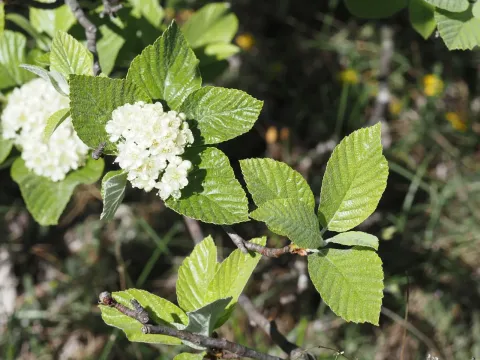
Whitebeam
Sorbus arioides
Seeds of the whitebeam are typically sown in autumn immediately after harvest. This allows the seeds to undergo natural stratification in the ground over the winter, which significantly improves germination rates in the spring.
What the section contains
Whitebeam
For spring sowing, seeds must be stratified artificially. They should be kept in a moist medium at temperatures between 0 and 5 degrees Celsius for approximately three to four months before planting.
Sowing depth should be kept shallow, between 1 and 2 centimeters. Covering the seedbed with a layer of mulch helps maintain consistent soil moisture and protects the seeds from extreme temperature fluctuations.
Seedlings develop slowly during their first two years. During this period, it is essential to keep the area clear of weeds and ensure the soil remains friable to support root development.
Vegetative propagation via cuttings or grafting onto common rowan rootstocks is often preferred for maintaining specific ornamental traits, as this method also results in faster maturation of the plant.
The whitebeam belongs to the Rosaceae family and requires plenty of direct sunlight to thrive. Adequate light is crucial for the foliage to develop its distinct silver-white underside, which is a key aesthetic feature.
The species prefers fertile, well-drained loamy soils. It is intolerant of waterlogged conditions, making proper soil drainage a mandatory step during the initial planting phase to prevent root rot.
While somewhat drought-tolerant once established, whitebeam requires supplemental watering during hot, dry summer months to maintain health and prevent premature leaf drop.
It is generally resilient to moderate cold but benefits from protection during its youth, especially in regions prone to heavy winter winds or severe frosts that might damage young bark and buds.
Maintenance includes light pruning in late winter or early spring. Removing dead, diseased, or crossing branches helps keep the crown open and ensures good air circulation, which is vital for disease resistance.
The primary use of the whitebeam is in ornamental horticulture. Its compact habit and striking leaf coloration make it a popular choice for urban parks, street avenues, and large private gardens.
The fruit of the tree is edible and can be used in culinary applications. The berries have a sweet, slightly astringent flavor that is suitable for making preserves, jams, and syrups when processed correctly.
Trees grown from seed typically enter their fruiting phase between 6 and 8 years of age. A healthy, mature tree can produce a substantial yield, though harvest is usually intended for decorative display or local use.
Whitebeam timber is dense, hard, and light-colored, making it a high-quality material for woodturning and carving. However, due to the tree's ornamental value, it is rarely harvested for timber production.
As an urban-tolerant species, the whitebeam plays an important role in ecological landscaping, providing shade, bird habitat, and effective pollution mitigation in dense metropolitan areas.
Apple scab is a common fungal disease affecting the foliage and fruit. Prevention involves maintaining good air circulation within the canopy and applying copper-based fungicides if infections appear.
Powdery mildew is another common concern, especially in warm, humid weather. It appears as a white, powdery dusting on the leaves, which can reduce the tree's vigor if left untreated.
Pests such as aphids and leaf-mining moths can cause significant damage to the new growth. Regular inspection throughout the spring is necessary to identify infestations early before they spread.
Root rot caused by stagnant moisture is a critical threat. Ensuring the planting site is correctly graded and that soil structure remains loose will minimize the risk of root-related illnesses.
Integrated pest management strategies, including the encouragement of natural predators like ladybirds and systemic insecticide applications where necessary, are effective in maintaining tree vitality throughout the season.