
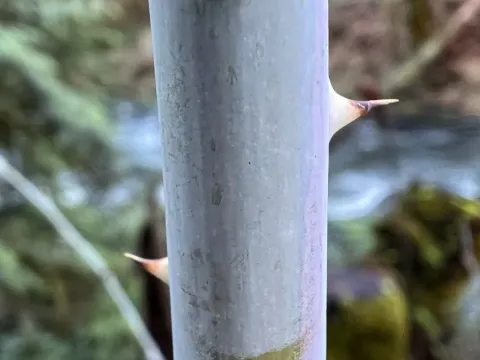
Whitebark raspberry
Rubus leucodermis
Whitebark raspberry (Rubus leucodermis) is a member of the Rosaceae family. It is a deciduous shrub characterized by its distinct glaucescent, white waxy bloom covering the stems, which provides a unique aesthetic and protective appearance.
What the section contains
Whitebark raspberry
The species is native to western North America, typically found in open forests, clearings, and mountain slopes. Its natural range demonstrates a high degree of adaptability to varying ecological conditions, from cool coastal regions to drier inland zones.
Successful cultivation requires well-drained, fertile soil with a slightly acidic to neutral pH. Proper drainage is paramount, as the root system of this species is highly susceptible to rot if subjected to prolonged waterlogging in heavy soils.
The plant thrives in full sun, which is crucial for fruit quality and sugar development. While it can tolerate partial shade, productivity is significantly higher when the plant receives at least six to eight hours of direct sunlight per day.
Agricultural management involves a structured trellis system to support the arching canes. Regular pruning of two-year-old canes that have already produced fruit is essential to maintain plant vigor and promote the growth of new, productive shoots.
The yield potential of whitebark raspberry is linked to site selection and maintenance intensity. With proper spacing and nutrient management, the plant provides a consistent supply of small, flavorful, dark-colored berries that are highly valued for fresh consumption and processing.
The primary threats include fungal diseases such as anthracnose, cane blight, and powdery mildew. These pathogens often emerge in high-humidity environments, manifesting as lesions on canes and foliage that can weaken the entire plant if left untreated.
Pests like aphids, mites, and cane borers pose significant challenges to commercial and home production. These insects can cause stunted growth or distorted fruit development, necessitating careful monitoring throughout the growing season.
Sanitation is the cornerstone of disease prevention. Removing and destroying infested canes, as well as clearing fallen leaves, significantly reduces the overwintering inoculum for many common fungal pathogens and insect pests.
Integrated pest management strategies should focus on thinning out the canopy to ensure adequate airflow. A well-ventilated plant canopy dries faster after rainfall, which serves as a natural deterrent to the spread of many moisture-loving fungi.
If chemical intervention becomes necessary, it should be timed carefully to avoid harming pollinators. Organic control methods, such as insecticidal soaps or neem oil, are often effective when applied at the first sign of pest activity.
Harvesting typically occurs mid-to-late summer as the berries ripen into deep blue or black shades. Given the perishable nature of the fruit, careful handling is required, and berries should be cooled immediately after harvest to preserve freshness.