
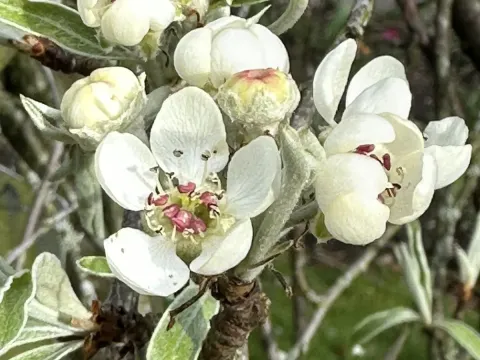
Willow-leaved pear
Pyrus salicifolia
The Willow-leaved pear (Pyrus salicifolia) belongs to the Rosaceae family. Native to the Caucasus and Western Asia, this tree has evolved to survive in arid, rugged climates, making it a highly resilient species for modern horticulture.
What the section contains
Willow-leaved pear
The tree is primarily prized for its ornamental value. It features narrow, silvery-grey foliage that strongly resembles willow leaves, providing a distinct shimmering effect in windy conditions that makes it a popular choice for landscape architecture.
When it comes to environmental requirements, this species thrives in full sun. Sunlight is essential to maintain the vibrant silvery pubescence on the leaves, which acts as a protective layer against intense solar radiation and excessive transpiration.
Soil adaptability is one of the key strengths of this culture. It tolerates poor, dry, and alkaline soils, provided that the drainage is excellent. It is not suitable for waterlogged locations, as the root system is prone to decay if kept in stagnant, wet conditions.
Cultural practices involve minimal intervention. Occasional structural pruning is beneficial, especially if the tree is being used for formal garden design or screening. It demonstrates exceptional winter hardiness and can endure significant seasonal temperature fluctuations.
The Willow-leaved pear is susceptible to several pathogens common to Pyrus species. Scab (Venturia pirina) is a recurring issue in humid regions, causing spots on foliage and potentially leading to premature defoliation if left unmanaged.
Fire blight, caused by the bacterium Erwinia amylovora, is the most destructive threat. It manifests as a sudden browning or blackening of shoots, flowers, and leaves. Strict sanitation and pruning of affected branches are necessary to contain the pathogen.
Insects like aphids and pear psylla often colonize the tender spring growth. These pests damage the vascular tissue and encourage the growth of sooty mold, which can diminish the aesthetic appeal of the tree's silver canopy.
A proactive approach to disease management includes regular monitoring and the use of copper-based fungicides during the dormant season. This helps in reducing the overwintering inoculum of fungi and bacteria on the bark.
Healthy trees are naturally more resistant to pests. By ensuring correct spacing for airflow and avoiding excessive nitrogen fertilization, which creates overly succulent growth, gardeners can significantly mitigate the risk of severe infestations.