
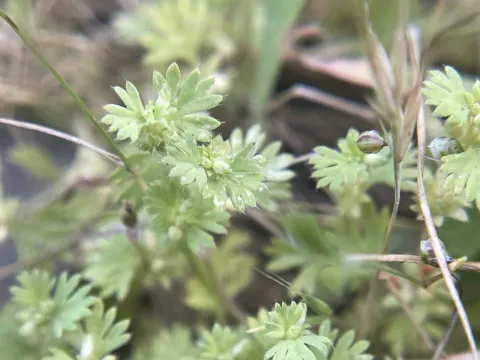
Western lady's mantle
Alchemilla occidentalis
Western lady's mantle (Alchemilla occidentalis) is a perennial herbaceous plant belonging to the Rosaceae family. In agricultural settings, seeds are typically sown in late autumn, allowing for natural winter stratification, which is essential for uniform germination.
What the section contains
Western lady's mantle
When spring sowing is planned, seeds must undergo cold stratification in a refrigerator for at least 45 days. Seeds are sown in rows spaced 30-40 cm apart, covered with a thin layer of soil, no deeper than 1 cm.
The plant exhibits slow initial growth, spending the first year establishing a dense basal rosette. Proper weed control during this establishment phase is critical for the long-term productivity of the plantation.
Vegetative propagation via rootstock division is a viable alternative for establishing larger areas. This process is best performed in early spring or autumn to ensure the plants establish well before the onset of extreme temperatures.
Selection of the site should prioritize areas with consistent soil moisture and moderate sunlight. While lady's mantle thrives in partial shade, optimal growth is achieved in bright locations with adequate water supply.
This species requires fertile, well-draining soils with a neutral to slightly acidic pH. While it appreciates moisture, it is highly sensitive to waterlogging, which can rapidly lead to root rot in heavier soil types.
The plant is hardy and well-adapted to temperate climates. It tolerates light frost and fluctuating weather conditions, provided that the soil structure remains loose and breathable to support its complex root system.
In commercial cultivation, incorporating organic matter before planting is recommended to improve soil structure. Supplemental nitrogen fertilization during the early spring growth phase promotes lush foliage production.
The spacing between plants must be carefully managed to ensure adequate airflow. High planting density significantly increases the risk of fungal infections in the basal rosette area, where moisture tends to persist.
Regular irrigation is vital during periods of summer drought. Maintaining soil moisture levels is necessary to prevent premature wilting and to ensure the synthesis of active secondary metabolites in the leaves.
Powdery mildew is the most frequent pathological threat to lady's mantle crops. It is characterized by a white, dusty fungal growth on the leaves, which significantly degrades the commercial value of the medicinal herb.
Root rot, typically caused by Fusarium or Pythium species, poses a major threat in poorly drained soils. The disease usually leads to sudden yellowing and collapse of the plant, often resulting in total crop loss in wet areas.
Slugs and snails are the primary pests that damage the succulent foliage. Effective management includes keeping the plantation clear of debris and performing regular inter-row cultivation to disrupt pest habitats.
Aphid infestations may occasionally occur, typically affecting the tender inflorescences. Biological control methods or insecticidal soaps are preferred to keep the product free from chemical residues for market compliance.
Crop rotation is mandatory to prevent the build-up of pathogens in the soil. Avoiding sites previously occupied by other Rosaceae family members helps maintain the health of the cultivation field.
Harvesting should be conducted during the peak flowering period, as this is when the chemical profile of the plant is at its most concentrated for therapeutic use. This typically occurs in mid-summer.
The entire above-ground part of the plant is harvested, leaving the basal rosette intact to allow for regrowth. Clean, sharp blades are essential to ensure a clean cut that heals quickly, reducing the plant's stress.
The harvested material must be dried immediately in a shaded, well-ventilated space. Controlled-temperature drying at 40-45 degrees Celsius is ideal to maintain the integrity of the active ingredients.
Drying is complete when the leaves are brittle and retain their characteristic color. Any discolored or damaged tissue should be removed during the sorting process to meet quality control standards.
Final storage requires airtight containers kept in a cool, dark location. Proper packaging prevents humidity-induced spoilage and helps preserve the medicinal potency for up to two years.