
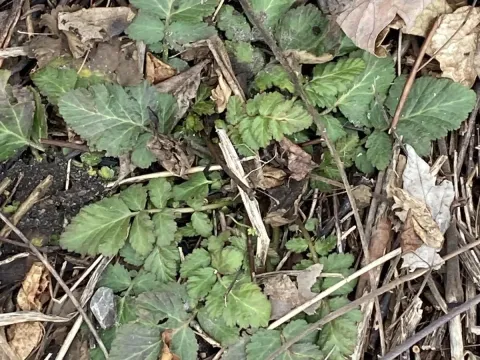
White avens
Geum canadense
White avens (lat. Geum canadense) is a perennial herbaceous plant belonging to the Rosaceae family. Native to North America, it is widely distributed across woodlands and moist meadows throughout the eastern parts of the continent.
What the section contains
White avens
The plant thrives in moist, well-drained soils rich in organic matter. While it is adaptable to various soil types, including clay and loamy soils, it performs best when the pH level is kept within the neutral to slightly acidic range.
Regarding light requirements, Geum canadense prefers partial shade. Direct exposure to intense afternoon sun can scorch the foliage and dry out the soil, therefore selecting a site with filtered light is crucial for healthy plant development.
Cultural practices involve maintaining consistent soil moisture, especially during the flowering stage. However, practitioners must ensure proper drainage, as prolonged waterlogging can lead to root system degradation and plant loss.
Economically, white avens is primarily valued for its medicinal properties. Historically, its roots have been used in traditional medicine, containing astringent compounds that are useful for treating digestive issues and sore throats.
Common diseases affecting Geum canadense include powdery mildew, which often appears in stagnant, humid air conditions. Providing sufficient spacing between plants helps promote air circulation and reduces fungal spore spread.
Pest threats include spider mites and occasionally leaf miners that may feed on the foliage. Integrated pest management, focusing on early detection and biological control methods, is recommended for maintaining plant health in agricultural settings.