
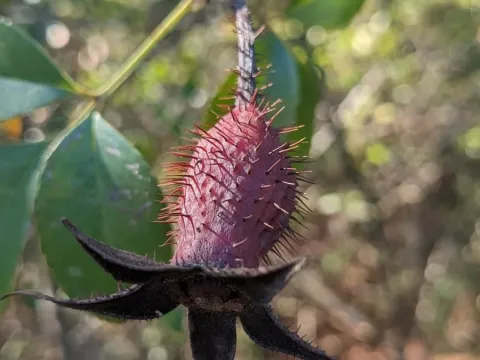
Cherokee rose
Rosa laevigata
The Cherokee rose (Rosa laevigata) is an evergreen or semi-evergreen climbing shrub belonging to the Rosaceae family. It is native to southern China, Taiwan, and other subtropical regions, where it thrives in warm, humid climates.
What the section contains
Cherokee rose
This species requires full sun and fertile, well-draining soil to perform optimally. Due to its climbing nature, providing sturdy support structures is essential for the healthy development of its long, thorny canes.
It is not frost-hardy and generally requires protection in cooler climates. Soil conditions should be slightly acidic to neutral; the plant is sensitive to waterlogging, which can easily lead to root decay.
Water management is critical during the establishment phase and periods of drought. Providing consistent moisture without over-saturating the substrate promotes both flowering and robust vegetative growth.
Propagation is typically achieved through cuttings. Proper spacing is necessary to ensure adequate airflow, which is the most effective way to prevent the development of common fungal pathogens associated with the genus Rosa.
Rosa laevigata is primarily cultivated for its rosehips, which are rich in nutrients and secondary metabolites. These are harvested for pharmaceutical use, dietary supplements, and traditional medicine applications.
Regular pruning is vital to maintain productivity and prevent the plant from becoming a tangled, unproductive mass. It is best to prune immediately after the blooming season to encourage new growth.
The harvest cycle must be carefully managed to ensure the highest concentration of bioactive compounds in the fruit. Careful handling is required due to the sharp, recurved thorns present on the stems.
Beyond its agricultural yield of fruit, the Cherokee rose is highly valued for its ornamental appeal, often used in landscaping to cover fences, pergolas, or walls where its large white flowers can be showcased.
Sustainability in yield is maintained by rejuvenating the shrub every several years, replacing older wood with vigorous new stems to ensure consistent flowering and fruit set.
Like many species in the genus, Rosa laevigata is susceptible to powdery mildew, especially in environments with high humidity and poor air circulation. This fungal condition causes a white coating on the leaves.
Black spot is another common disease that impacts the foliage, leading to premature leaf drop and weakening the overall vitality of the plant during the active growing season.
Aphids represent a primary pest threat, often gathering in large numbers on tender new shoots and buds. Their feeding can distort growth and stress the plant significantly.
Spider mites are frequently encountered during hot and dry periods, causing leaf chlorosis and stippling. Regular monitoring is essential to keep pest populations below an economic threshold.
Root diseases, often caused by Pythium or Phytophthora species, are associated with poor drainage. Implementing an effective irrigation schedule and maintaining clean soil conditions are the best defensive measures.