
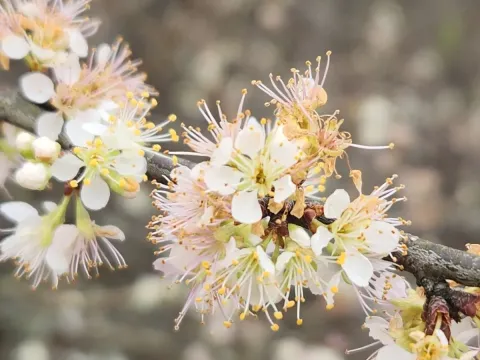
Chickasaw plum
Prunus angustifolia
The Chickasaw plum (Prunus angustifolia) is a member of the Rosaceae family, native to the southeastern United States, known for its small size and suckering habit.
What the section contains
Chickasaw plum
It thrives in full sun exposure, which is essential for producing a robust crop of small, flavorful fruits that are widely valued for jellies and preserves.
The species is highly adaptable to various soil types, ranging from sandy soils to heavier clays, provided there is adequate drainage to prevent root rot.
This shrub or small tree is noted for its impressive drought tolerance, making it an excellent choice for low-maintenance orchards or natural hedging projects.
In terms of climate, it prefers warm temperate regions and demonstrates good resistance to extreme summer temperatures, which are common in its native range.
Like many members of the Prunus genus, the Chickasaw plum is susceptible to fungal issues such as black knot and brown rot, which can impact fruit quality.
Insect pests, including plum curculio and various aphids, can cause significant damage to the developing fruit and young foliage if left unmanaged.
Bacterial canker is another concern that growers should monitor, especially in areas where spring weather is characterized by fluctuating temperatures and rain.
Strategic pruning and thinning of the branches are necessary to improve air circulation, which significantly reduces the risk of moisture-loving pathogens.
Integrated pest management, including regular scouting and the removal of fallen fruit, is recommended to break the lifecycle of most common orchard pests.