
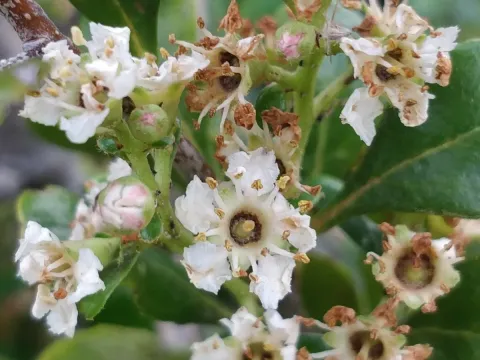
Chamaemeles
Chamaemeles
Chamaemeles, represented by the species Chamaemeles coriacea, is an evergreen shrub belonging to the Rosaceae family. It is a rare endemic plant strictly localized to the island of Madeira.
What the section contains

Chamaemeles
The plant thrives in specific mountainous environments, requiring well-drained volcanic soils. It has adapted to the unique climatic conditions of the archipelago, favoring stability and moderate humidity levels throughout the year.
Regarding soil requirements, the species performs best in rocky substrates that offer excellent aeration for its root system. A balance between moisture retention and drainage is essential for its survival in any experimental cultivation setting.
Environmental conditions must mimic the mild oceanic climate of Madeira, avoiding extreme temperature fluctuations. The shrub requires a balanced light exposure, typically found on sheltered slopes, to maintain its vegetative development.
Currently, there is no commercial agricultural practice for Chamaemeles, as it is protected. Research focuses primarily on its ex-situ conservation within botanical gardens to prevent the extinction of the species.
The primary threat to the existence of Chamaemeles is habitat degradation caused by environmental changes on the island. The limited geographical range makes it highly vulnerable to any shift in local ecological conditions.
Invasive plant species present a constant threat by encroaching on the limited territory occupied by Chamaemeles. This competition for natural resources significantly hinders the reproduction and spread of this rare shrub.
Root rot and various fungal pathogens pose a significant risk, especially if soil aeration is compromised. Managing these health risks is difficult due to the fragility of the remaining wild populations.
Leaf-feeding insects can cause severe damage during the growing season, potentially leading to a decline in the plant's overall health. Such damage often exposes the plant to secondary infections that are hard to treat.
Anthropogenic impacts, such as soil erosion from grazing livestock and infrastructure development, continue to limit the survival chances of this endemic plant. Conservation programs are currently essential for its survival.