
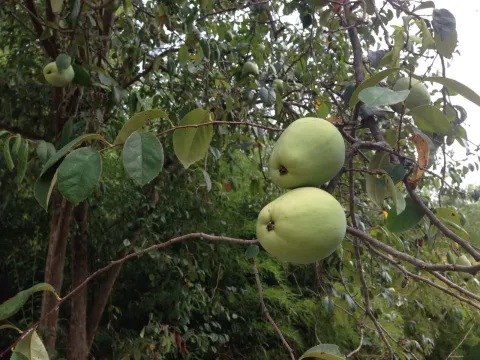
Chinese quince
Pseudocydonia
The Chinese quince belongs to the Rosaceae family and is recognized as a distinct fruit tree species. Unlike the common quince, Pseudocydonia develops into a tall, majestic tree with a characteristic exfoliating bark that provides significant aesthetic value to orchards.
What the section contains

Chinese quince
Propagation is typically achieved through vegetative methods such as grafting or cuttings, which ensure the offspring inherit the parent tree's superior traits. Seed propagation is possible but requires long-term cold stratification for several months to break dormancy.
The ideal time for planting is early spring or autumn, depending on local winter severity. It thrives best in locations with full sun exposure and protection from strong, drying winds that could damage leaves and flowers.
When preparing the planting site, enriching the soil with organic matter and balanced fertilizers is essential. Planting depth must be carefully managed to ensure the root collar remains at the soil surface, preventing potential growth issues.
Proper establishment requires consistent watering during the first growing seasons. Mulching the area around the base of the tree is a vital practice that keeps the soil moist and suppresses competing weed growth.
Pseudocydonia requires well-drained, fertile loamy soil to flourish. It is highly sensitive to waterlogged conditions, making proper drainage systems mandatory for large-scale agricultural plantings.
Climate is the primary factor limiting the distribution of this species. It prefers long, warm summers with adequate heat accumulation to ensure the fruit reaches its full potential in size and sugar content.
Although it possesses some cold hardiness, young trees should be protected during their initial winters. Mature trees can handle moderate freezing, but extreme fluctuations can cause bark damage or branch dieback.
Regular maintenance pruning is essential for tree health. By removing dead or crowded branches, the gardener improves airflow and light penetration, which are key to preventing foliage-related diseases.
Nutrient management involves seasonal applications of compost or specialized NPK fertilizers. Potassium and phosphorus are particularly important for supporting heavy fruit loads and building winter resilience.
Chinese quince generally enters the fruiting stage within 4 to 6 years after planting. Full productive maturity is reached as the tree grows older, typically yielding large, fragrant, and highly useful fruits.
The fruit is known for its high pectin content and strong aroma, making it a prized ingredient for jams, jellies, and traditional medicinal infusions. It is a niche, high-value crop for modern orchards.
A healthy, mature tree can produce a significant weight of fruit, often ranging from 30 to 70 kilograms per season. The firmness of the fruit allows for easier storage and transport compared to softer stone fruits.
Productivity is enhanced by effective cross-pollination. While trees can be partially self-fertile, keeping multiple cultivars in proximity usually results in better fruit set and larger harvest numbers.
Storage is straightforward; fruits kept in a cool, ventilated environment can remain in good condition for several weeks, with the flesh softening and the aroma intensifying as they reach peak ripeness.
Fungal pathogens such as Monilia (brown rot) and powdery mildew are the most common threats to Pseudocydonia. These are best managed through proactive hygiene and timely fungicide applications.
Pests like the codling moth can damage the fruit quality significantly. Integrated pest management, including the use of pheromone traps and biological controls, is highly recommended for organic orchards.
Aphids and scale insects occasionally infest younger shoots. Regular inspection allows for the early detection and manual or chemical removal of these pests before they cause systemic damage.
Sanitation in the orchard, specifically the removal of fallen leaves and mummified fruit, is critical. This practice destroys the overwintering sites for the majority of tree diseases and parasites.
Applying copper-based dormant sprays in early spring helps protect the bark and buds, acting as a preventative shield against a broad spectrum of seasonal bacterial and fungal infections.
Harvesting usually takes place in late autumn when the fruit transitions from green to a distinct golden-yellow color and emits a strong, pleasant fragrance that signifies peak maturity.
It is crucial to complete the harvest before the first hard frost. Frost damage to the fruit can lead to rapid deterioration of texture and flavor, effectively shortening the post-harvest shelf life.
Hand-picking is the preferred method to prevent bruising. Because the fruit skin is sensitive to impact, care must be taken during the process to ensure the fruit remains unblemished for long-term storage.
After picking, the fruits should be stored in a cool place at temperatures between 0 and 5 degrees Celsius. This environment helps maintain freshness while allowing the natural ripening process to continue slowly.
With correct harvesting and storage techniques, the Chinese quince remains a high-quality product throughout the winter season, retaining its unique culinary properties for diverse processing needs.