
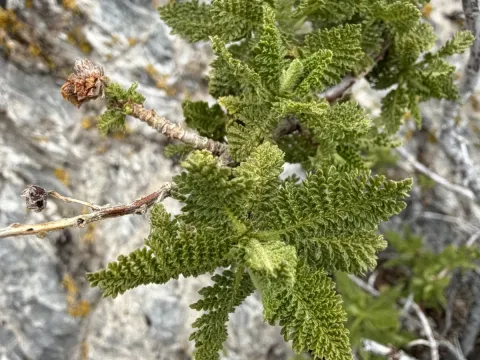
Chamaebatiaria
Chamaebatiaria
Chamaebatiaria, commonly known as fernbush, is a monotypic genus belonging to the Rosaceae family. Its name comes from the striking resemblance of its fern-like, finely divided foliage to that of actual fern species.
What the section contains

Chamaebatiaria
Native to the arid regions of the Western United States, this shrub has evolved to thrive in harsh environments. It typically grows on rocky slopes and canyons, requiring excellent drainage and full sun exposure for optimal development.
Botanically, it is a sturdy, upright shrub that can reach up to two meters in height. The foliage is evergreen or semi-evergreen depending on the climate, and it produces fragrant, creamy-white panicles of flowers during the summer months.
Cultivation requirements are relatively low. The plant demands well-aerated soil and is highly drought-tolerant once established. It is an ideal specimen for xeriscaping or rock gardens where water conservation is a priority.
In terms of climate, Chamaebatiaria is quite hardy. It can tolerate significant cold, provided that the soil is not waterlogged during the dormant season, which could lead to crown or root issues.
The most significant threat to Chamaebatiaria is poor drainage. If the soil remains saturated for extended periods, the plant becomes susceptible to root rot and crown rot, which can be fatal for the shrub.
Due to its aromatic leaves, the shrub is generally resistant to many common garden pests. The volatile oils contained within the foliage act as a natural deterrent, reducing the need for chemical pesticide intervention.
Powdery mildew can occur in environments with high humidity and poor air circulation. To mitigate this risk, gardeners should ensure adequate spacing between plants and avoid overhead watering that keeps the foliage constantly damp.
Standard horticultural maintenance, such as the pruning of dead wood, helps keep the plant vigorous and less prone to opportunistic infections. Regular thinning of the branches promotes airflow, which is crucial for preventing fungal issues.
If intervention is necessary due to severe infestation or disease, gardeners should utilize appropriate systemic treatments while focusing primarily on correcting the environmental conditions that allowed the problem to emerge.