
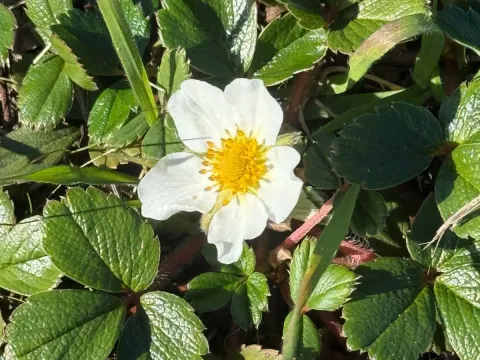
Chilean strawberry
Fragaria chiloensis
The Chilean strawberry (Fragaria chiloensis) is a perennial herbaceous plant belonging to the Rosaceae family. It is historically significant as one of the two parent species of the modern cultivated strawberry, known for its resilience and unique genetic traits.
What the section contains
Chilean strawberry
Native to the Pacific coastal regions of North and South America, this species is highly adapted to maritime climates. It thrives in well-draining, sandy, or loamy soils and requires a specific balance of moisture and cool temperatures to reach its full potential.
Botanically, it features thick, leathery, dark green leaves and a robust root system that helps the plant survive in windy, exposed coastal environments. The plants are naturally stoloniferous, allowing them to spread effectively across suitable terrain.
The climate requirements for this species include mild, cool summers and protected winters. Unlike many hybrid strawberries, it does not tolerate extreme heat or intense direct sunlight, preferring environments with consistent, cool, and humid air.
Economically, the Chilean strawberry is valued primarily for its germplasm, which contributes to the development of climate-resilient cultivars. The fruits are generally large with white or pale pink flesh and a distinct aroma, serving as a key resource in specialized breeding programs.
The primary threats to this crop involve soil-borne pathogens, particularly root rots triggered by waterlogged conditions. Proper soil drainage and aeration are essential management practices to ensure long-term health of the plantation.
Powdery mildew is a significant foliar concern, especially in high humidity scenarios. It manifests as a white, dusty growth on the leaves, which can be mitigated by ensuring adequate air circulation through proper planting density.
Nematodes pose a serious risk to root health, potentially stunting growth and reducing overall yield. Growers are advised to use certified virus-free runners and to practice crop rotation to manage soil-borne pest populations.
Spider mites can become a major issue during drier seasons, feeding on the undersides of the leaves and causing chlorosis. Monitoring and timely intervention with biological controls help protect the plant's photosynthetic capacity.
Slugs and snails are common pests that damage ripening fruits by feeding on them during damp weather. Utilizing mulches or physical barriers between the fruit and the soil is an effective technique to protect the harvest from such damage.