
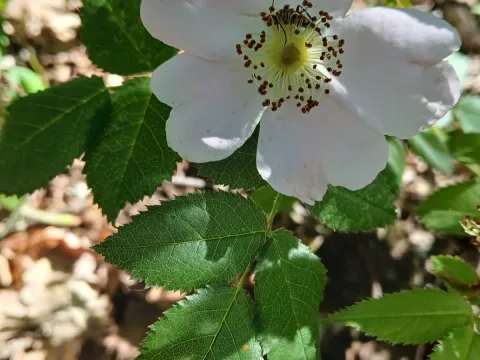
Jundzill's rose
Rosa jundzillii
Jundzill's rose (Rosa jundzillii) is a perennial shrub belonging to the Rosaceae family. It is typically identified by its specific morphological features, including its glandular sepals and distinct prickles.
What the section contains
Jundzill's rose
The plant requires well-drained, lime-rich soil to thrive. It is well-adapted to temperate climates, showing significant resilience to cold winter temperatures and seasonal weather fluctuations.
Exposure to full sunlight is critical for the healthy development of this species. It is commonly found in forest edges and on sunny slopes where the competition from larger trees is minimized.
Cultivation requires minimal intervention, primarily focusing on weed control in the early growth stages. Proper mulching can help maintain soil moisture during hot summer months.
Propagation is typically achieved through seeds or layering. The shrub reaches its full productive potential when planted in sites that mirror its natural ecological niche requirements.
The most common diseases affecting Rosa jundzillii include powdery mildew and black spot. These fungal issues are often triggered by prolonged periods of humidity and poor air circulation.
Pests, particularly aphids and various leaf-feeding caterpillars, pose a regular threat. Monitoring for these insects is necessary to prevent significant damage to the plant's foliage.
Cultural control methods, such as pruning to ensure airflow through the canopy, are highly recommended to prevent the buildup of pathogens during the growing season.
Integrated pest management strategies should be applied if infestation levels exceed acceptable thresholds. Using natural predators or soft soaps can often be enough for smaller plots.
Regular inspection of the plant's basal area and branches helps in early detection of potential threats, ensuring the shrub remains vigorous and productive throughout its lifecycle.