
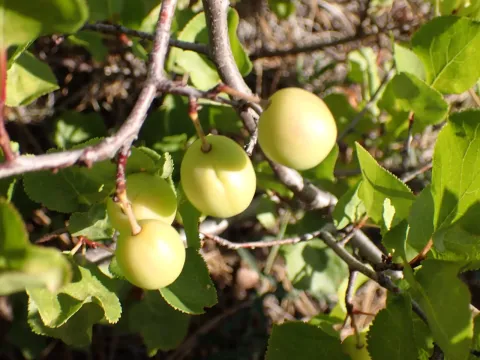
Klamath plum
Prunus subcordata
The Klamath plum (Prunus subcordata), also known as the Oregon plum, is a deciduous shrub or small tree belonging to the Rosaceae family. Native to California and Southern Oregon, it is well-adapted to rocky, dry slopes and riparian areas.
What the section contains
Klamath plum
The species is distinguished by its dense, thicket-forming habit, which is facilitated by an extensive system of root suckers. Its leaves are typically small and oval-shaped, contributing to the plant's overall resilient and hardy appearance.
Regarding soil requirements, the Klamath plum thrives in well-draining, stony, or sandy substrates. It is highly valued for its drought tolerance, allowing it to survive in environments where more sensitive fruit species might struggle.
The climate requirements involve cold winter dormancy followed by a warm, dry growing season. This pattern is essential for the tree's health and successful flower bud initiation, making it suitable for temperate regions with significant seasonal variations.
Agrotechnical practices should focus on maintaining a manageable canopy through regular pruning. Furthermore, managing the root suckers is crucial if the tree is being maintained in a structured orchard environment rather than as a natural thicket.
Yield production relies heavily on cross-pollination, as most individuals are self-incompatible. The fruit is a small, versatile drupe that turns from yellow or red to deep purple upon ripening, offering a balanced sugar-to-acid ratio.
Commercially, the fruits are highly sought after for artisanal jams, jellies, and sauces. They contain high pectin levels, which makes them an excellent base for high-quality preserves and specialty culinary products.
Threats include typical orchard pests such as aphids and plum fruit moths, which can damage developing fruit and foliage. Maintaining tree vigor and thinning fruit can mitigate some of the damage caused by these insects during the growing season.
Fungal diseases like shot-hole fungus and brown rot present a significant challenge, especially in humid conditions. Implementing a rigorous sanitation schedule, including the removal of mummified fruit, is vital for long-term health.
Harvesting typically occurs between late summer and early autumn. Because the fruit ripens at different times, hand-picking in several passes is the standard approach to ensure the optimal quality and sweetness of the produce.