
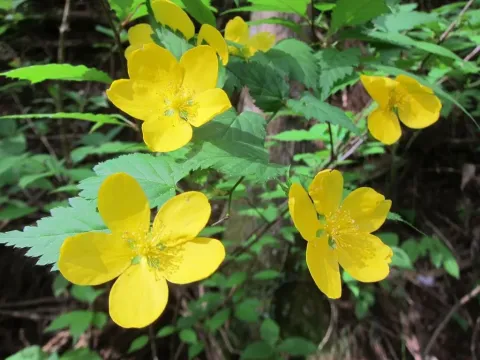
Kerria
Kerria DC.
Kerria (Kerria DC.) is a deciduous shrub belonging to the Rosaceae family. It is native to the temperate regions of East Asia, specifically China and Japan, where it is found in woodland habitats and mountain slopes.
What the section contains

Kerria
The plant is known for its bright green, slender, arching stems which add structure to the landscape even in winter. Its leaves are serrated, ovate, and provide a vibrant green backdrop that turns a striking yellow shade during the autumn season.
To ensure healthy development, Kerria requires a sheltered spot protected from harsh, drying winds. It thrives in well-drained, fertile soil that retains moisture but does not become waterlogged. The shrub prefers partial shade, although it can tolerate full sun in cooler climates.
Agronomic practices for this plant are relatively straightforward, focusing on regular watering during dry spells to maintain soil moisture. Annual pruning after the main flowering period is essential to remove old, woody stems and encourage the growth of new, vigorous shoots.
The primary use of Kerria is in ornamental gardening and landscape design. It is frequently employed for establishing flowering hedges, creating focal points in shrub borders, or being used in mixed planting schemes to add brilliant yellow color during the spring.
Kerria is generally considered a low-maintenance plant with strong resistance to most common diseases. However, in conditions of poor air circulation or excessive soil moisture, leaf spot diseases caused by fungi may occasionally develop on the foliage.
Insect pests that may affect the shrub include aphids, which tend to cluster on soft new growth, and spider mites, particularly during hot and dry weather. Managing these pests involves timely inspections and the use of appropriate horticultural soaps or systemic insecticides if infestations occur.
Cultural prevention is the best defense against threats; this includes removing leaf litter from the base of the plant in the autumn and ensuring the shrub is not overcrowded. Maintaining general plant vigor through balanced fertilization helps it recover quickly from minor stresses.
Although hardy, Kerria may suffer from stem dieback in regions with extremely harsh winters. Providing a layer of organic mulch around the root zone helps protect the plant and moderates soil temperature fluctuations throughout the dormant period.
By carefully selecting the planting site and adhering to basic care guidelines, gardeners can keep Kerria thriving with minimal effort. Its adaptability and showy flowers make it a valuable asset for any landscape, provided standard protection measures are taken.