
Kashmir rowan
Sorbus cashmiriana
Description
Growing requirements
The Kashmir rowan (Sorbus cashmiriana) is a member of the Rosaceae family. This deciduous tree or large shrub originates from the high-altitude regions of the Himalayas and Kashmir. It is well-adapted to temperate climates and demonstrates excellent resilience to cold, making it suitable for a wide range of garden settings.
For optimal growth, the plant requires well-draining, fertile soil that is slightly acidic to neutral. Waterlogging must be strictly avoided, as the root system is highly sensitive to excessive moisture. In areas with heavy clay soils, it is essential to incorporate organic matter or install a drainage layer during planting.
This species thrives in full sun but can tolerate partial shade. In warmer regions, it is advisable to provide some protection from the harsh afternoon sun to prevent scorched foliage and ensure the plant maintains its vigor throughout the summer months.
Cultural practices include regular, deep watering during dry spells, especially during the establishment phase. Applying a layer of organic mulch around the base of the tree helps to conserve soil moisture, regulate root temperature, and minimize weed competition.
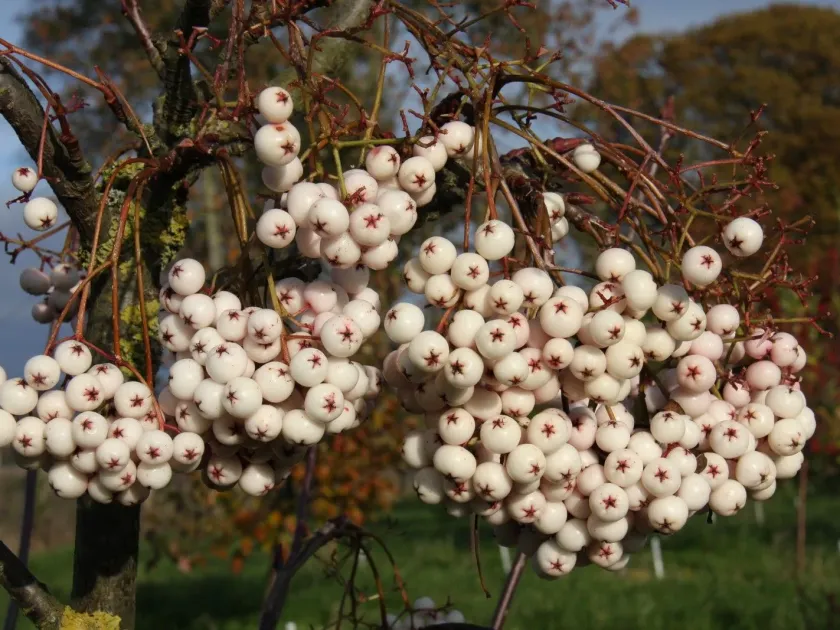
The Kashmir rowan is primarily utilized as an ornamental specimen in landscape architecture. Its striking white, porcelain-like berries, which persist long after the leaves have fallen, make it a focal point in winter gardens, providing high aesthetic value in both public parks and private estates.
Main diseases and pests
The Kashmir rowan is susceptible to various fungal diseases, including powdery mildew and apple scab, particularly when grown in conditions with poor air circulation or high humidity. Maintaining proper spacing between trees is crucial for disease prevention.
Fire blight is a serious bacterial threat that can damage branches and stems. If symptoms such as blackened, drooping leaves are detected, the affected parts must be pruned back well into healthy wood and disposed of carefully to halt the spread of the pathogen.
Pest management focuses on controlling aphids and sawflies, which often target tender new growth in the spring. Integrated pest management (IPM) strategies, including encouraging natural predators like ladybugs, can effectively keep these populations at manageable levels.
Routine maintenance pruning is essential to remove dead, diseased, or crossing branches. This practice not only improves the tree's overall shape but also enhances airflow within the canopy, significantly reducing the environment suitable for fungal colonization.
- Monitor foliage regularly for early signs of chlorosis or spot diseases.
- Apply dormant oil sprays in early spring to suppress overwintering pests.
- Ensure irrigation methods do not wet the leaves to reduce disease pressure.