
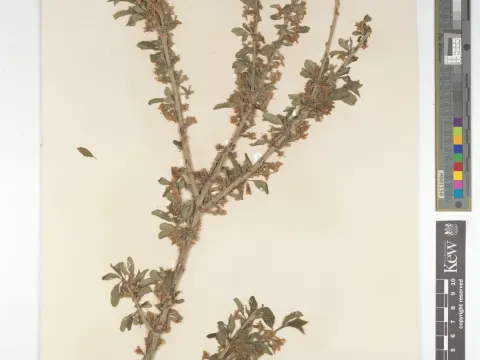
Jacquemont's cherry
Prunus jacquemontii
Jacquemont's cherry, scientifically known as Prunus jacquemontii, is a deciduous shrub belonging to the Rosaceae family. Native to the mountainous regions of Afghanistan, Pakistan, and the Himalayas, it is renowned for its extreme resilience and ability to thrive in challenging alpine environments.
What the section contains
Jacquemont's cherry
This shrub requires full sunlight to achieve optimal growth and prolific flowering. It is particularly well-adapted to rocky and poor soils, provided that the drainage is excellent. It cannot tolerate waterlogged conditions, which can lead to rapid root rot and plant decline.
Regarding climate requirements, this species exhibits high cold hardiness, making it suitable for regions with harsh winter temperatures. Its natural habitat suggests that it is accustomed to fluctuations in moisture and temperature, which contributes to its overall robustness in cultivation.
Agrotechnical maintenance includes regular pruning to manage the dense, shrubby growth habit. Removing dead or overlapping branches ensures that air circulation is maintained throughout the canopy, which is an effective strategy to reduce the risk of humidity-related pathogens.
In agricultural practice, Jacquemont's cherry is primarily recognized for its value as a rootstock. Due to its genetic traits, it can influence the vigor of grafted scions, often resulting in more compact trees that are easier to manage and harvest in commercial orchard settings.
The main threats to Prunus jacquemontii include common stone fruit diseases such as monilinia (brown rot) and coccomyces leaf spot. Maintaining proper hygiene by clearing fallen leaves and diseased fruit helps in reducing the inoculum density in the garden.
Common pests like aphids and fruit flies may occasionally infest the plant during the growing season. Integrated pest management, which includes monitoring and the use of selective insecticides or organic soaps, is recommended to keep these populations under control.