
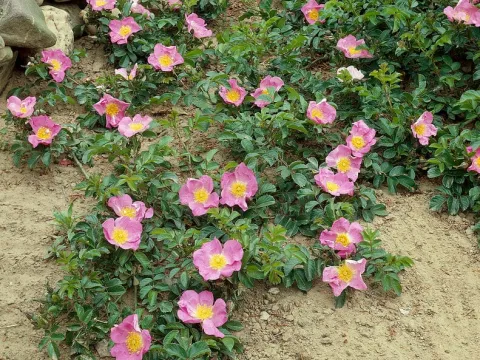
Jackson's rose
Rosa jacksonii
Jackson's rose (Rosa jacksonii) is a perennial ornamental shrub belonging to the Rosaceae family. This species is recognized for its unique structural characteristics, which make it a significant plant in horticultural applications.
What the section contains
Jackson's rose
The plant originates from temperate regions, which dictates its preference for moderate climate conditions. It thrives in locations that provide ample sunlight, as adequate exposure is a prerequisite for optimal blooming and vigorous vegetative growth.
Optimal soil conditions for this species involve fertile, well-draining loams with a neutral to slightly acidic pH level. It is essential to ensure that the site does not suffer from waterlogging, as the root system of the Rosa jacksonii is highly susceptible to rot under anaerobic conditions.
The cultivation practices require a structured fertilization schedule. Nitrogen-rich fertilizers are essential during the early spring phase to promote leaf development, while potassium and phosphorus should be prioritized as the plant enters the budding stage to enhance flower quality.
Regarding its utility, Jackson's rose serves primarily as an ornamental feature. It is frequently integrated into landscape design projects, including border plantings and garden hedging, due to its reliable performance and aesthetic versatility.
The primary phytopathological threats for Rosa jacksonii include black spot and powdery mildew. These fungal diseases thrive in high-humidity environments where airflow is restricted, leading to significant foliage damage if left untreated.
Common insect pests include aphids and spider mites, which can drain nutrients from the plant's succulent tissues. Integrated pest management strategies, involving both biological controls and targeted chemical treatments, are recommended for long-term health.
Pruning is a critical maintenance practice for both shape and health. By removing deadwood and thinning the inner branches, gardeners can significantly improve aeration, thereby creating an unfavorable environment for fungal pathogens.
Crop protection efforts should focus on timely monitoring of the plant's health status. Applying preventative fungicides in early spring can help mitigate the risk of seasonal outbreaks of common rose diseases.
Winter care is vital in cooler climates. Providing a protective mulch layer around the base of the plant helps insulate the root zone from extreme frost, ensuring that the rose recovers and grows successfully in the following spring season.