
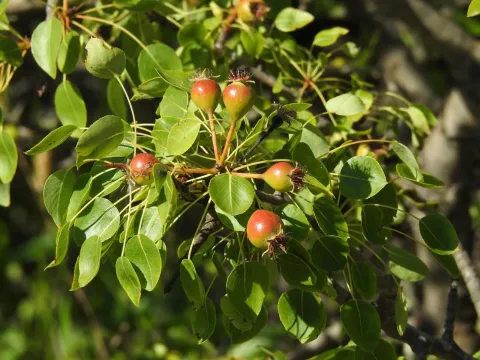
Iberian pear
Pyrus bourgaeana
The Iberian pear (Pyrus bourgaeana) is a deciduous tree belonging to the Rosaceae family. It is endemic to the Iberian Peninsula, specifically occurring throughout Spain and Portugal, with scattered populations in parts of Morocco.
What the section contains
Iberian pear
This species is highly adapted to the Mediterranean climate, characterized by hot, dry summers and mild, wet winters. It demonstrates significant drought resistance, allowing it to thrive in nutrient-poor and stony soils where other pear species would struggle.
In terms of habitat, it is typically found in open Mediterranean forests and scrublands, often associated with cork oaks and other evergreen species. The tree requires full sun exposure to maintain its health and vigor.
Morphologically, it develops into a small to medium-sized tree or a large shrub. The leaves are generally small, often showing pubescence on the underside, and the branches can sometimes bear thorns, which is a common defensive trait in many wild Pyrus species.
Soil requirements are relatively modest, as the species is well-adapted to the calcareous or siliceous soils prevalent in its native range. It performs best in well-drained environments, as waterlogging is a primary stress factor for the root system.
The fruits of the Iberian pear are small, globose or pyriform, and typically contain many stone cells, making them unpalatable for fresh consumption by humans compared to modern cultivars.
While direct agricultural production is limited, the species is valued for its potential as a rootstock. Its ability to tolerate dry conditions makes it an excellent candidate for grafting cultivated pear varieties in Mediterranean climates.
Fruit production is highly variable and depends on environmental factors. The fruit serves as an important food source for local wildlife, contributing to the biodiversity of the scrubland ecosystems.
Researchers are focusing on the genetic potential of the fruit and the tree itself to identify specific traits that confer resistance to diseases and abiotic stress, which could be useful for commercial fruit breeding.
Harvesting is not done on a commercial scale for human consumption, but limited traditional uses in local preparations like preserves or infusions have been recorded in some rural areas.
The Iberian pear faces pressure from land-use changes, such as the clearing of shrublands for agriculture or urban expansion, which fragments existing populations and hinders natural regeneration.
Fire is a major threat to this species, as Mediterranean scrublands are prone to frequent summer wildfires that can destroy young individuals and weaken mature trees.
Bacterial fire blight (Erwinia amylovora) remains the most critical pathological threat, potentially causing severe damage to the tree's vascular system and leading to crown dieback.
Pests including various scale insects, aphids, and fruit-boring larvae can significantly stress the trees, particularly in isolated populations that have lower genetic resilience.
Fungal pathogens causing leaf spot and scab are more prevalent during abnormally wet springs, leading to foliage loss and a decrease in photosynthetic efficiency, which hinders growth and fruit set.