
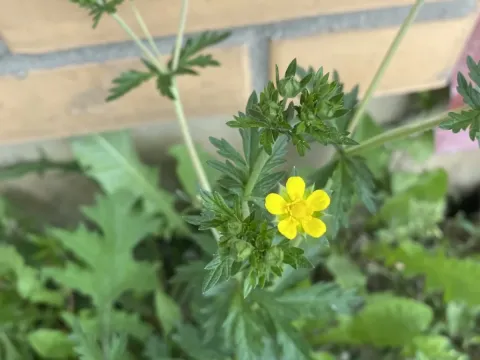
Intermediate cinquefoil
Potentilla intermedia
Intermediate cinquefoil is a perennial plant that thrives when established through seed sowing in prepared soil. The seeds are small and should be placed at a shallow depth of 0.5 to 1 centimeter, ensuring they are not buried too deeply to maintain high emergence rates.
What the section contains
Intermediate cinquefoil
Optimal sowing periods fall within early spring or late summer, allowing the plants to establish a robust root system before encountering environmental extremes such as severe heat or freezing temperatures.
Seedbed preparation is crucial for success, requiring a fine, firm surface to ensure consistent contact between the seed and soil. This practice minimizes the risk of desiccation in the topsoil layer during the sensitive germination phase.
When sowing for forage or conservation purposes, plant density should be managed to avoid overcrowding. Proper spacing supports individual plant vigor and promotes higher biomass yields during the peak growing season.
Once established, the plants demonstrate high resilience and a capacity for natural regeneration, which is beneficial for long-term land cover stability. Successional planting or inter-seeding can be used to manage population density over multiple years.
Belonging to the Rosaceae family, Potentilla intermedia is known for its ecological adaptability. It thrives in various soil types, ranging from sandy loams to heavier substrates, and exhibits remarkable tolerance for drought conditions once fully developed.
The plant requires full sun to partial shade for optimal growth. It is frequently found in open fields and meadows where access to direct sunlight supports the development of lush foliage and high flowering potential.
Regarding soil chemistry, the intermediate cinquefoil prefers neutral to slightly acidic environments. While it is not a heavy nutrient feeder, it responds positively to well-drained soils where air can adequately reach the root zone.
Climatic requirements are modest, as the species is well-adapted to temperate regions. It possesses strong winter hardiness, allowing it to survive sub-zero temperatures while maintaining viability in its subterranean organs until the return of spring warmth.
Its water-use efficiency is a key agricultural trait, as the plant can maintain productivity even during dry spells. This makes it a reliable component in systems where irrigation infrastructure may be limited or entirely absent.
Like many species within the Rosaceae family, the intermediate cinquefoil is susceptible to fungal pathogens such as powdery mildew. These diseases typically manifest during periods of high humidity and stagnant air, making field management and air circulation vital.
Insects, particularly leaf-feeding beetles and certain caterpillar species, can cause damage to the foliage. Monitoring programs are essential to detect localized outbreaks before they impact the overall vitality of the plant stand.
Root rot remains a potential concern in fields with poor drainage or chronic waterlogging. Managing soil moisture levels through proper site selection and mechanical drainage is the most effective preventative measure against these infections.
Weed competition during the seedling stage is a significant threat, as young plants may struggle to outcompete faster-growing grasses. Post-sowing weed management or selecting sites with low initial weed pressure is highly recommended.
Integrated pest management strategies should prioritize biological controls to maintain the ecological balance within the field. Maintaining high plant vigor through proper soil fertility ensures the crop remains resilient against the majority of common threats.