
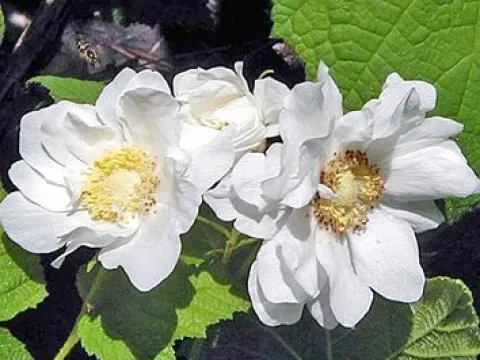
Ichang blackberry
Rubus ichangensis
Ichang blackberry (Rubus ichangensis) is a distinctive perennial shrub belonging to the Rosaceae family. It is native to the mountain forest regions of China, where it typically grows in humid environments with dappled sunlight, making it a unique species compared to more common commercial blackberries.
What the section contains
Ichang blackberry
The plant thrives in well-drained, fertile loamy soils with a slightly acidic to neutral reaction. Providing a mulch layer is essential for this species to retain soil moisture and prevent the root system from drying out during hot summer months, as it is particularly sensitive to water stress.
In terms of climate requirements, Rubus ichangensis prefers mild temperatures and protection from harsh, drying winds. While it is adapted to subtropical forest climates, it can handle moderate cool seasons, provided that the soil does not freeze deeply for extended periods.
Agrotechnical management involves the use of trellises to manage its scrambling growth habit. Regular pruning of old, non-productive canes is necessary to maintain plant vigor and encourage the development of new, fruit-bearing canes for the following season.
Regarding its utility, this species is primarily valued in breeding programs for its genetic traits and its potential to introduce hardiness or unique flavor profiles to new hybrid varieties. It remains an interesting plant for specialized fruit growers and enthusiasts of rare botanical species.
The primary health concerns for Ichang blackberry include fungal diseases such as leaf rust and grey mold, which are favored by stagnant air and high humidity. Proper site selection and maintaining an open canopy through thinning are the most effective cultural controls against these pathogens.
Pest pressures often involve infestations by aphids and certain species of mites that target tender foliage. Managing the plant's health through optimal nutrition and monitoring for early signs of infestation is crucial for maintaining productivity and preventing significant damage to the plant tissue.