
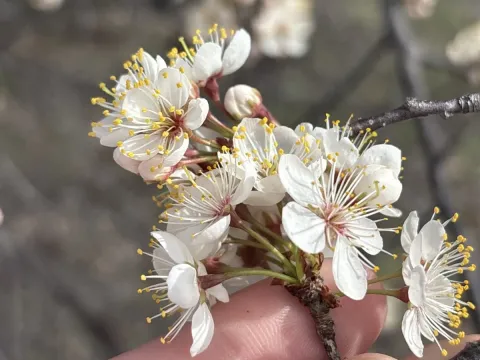
Woolly plum
Prunus lanata
The Woolly plum (Prunus lanata) is a distinct species within the Rosaceae family. It is easily identified by the soft pubescence present on its young shoots and the undersides of its leaves, which gives the plant its common name.
What the section contains
Woolly plum
This species thrives in temperate climates. It requires a sunny location to ensure optimal photosynthesis and fruit maturation. It is important to protect young trees from cold, prevailing winds that could damage soft tissue.
The ideal soil conditions for this tree include well-draining loams or sandy-loam soils. It does not tolerate waterlogged conditions, as poor drainage often leads to root rot and general plant decline.
Proper agronomic management involves regular fertilization to support vigorous growth and consistent fruit production throughout the growing season.
Pruning is essential for maintaining an open crown structure. This practice allows for better air circulation and sunlight penetration, which are vital for reducing the incidence of fungal diseases.
Woolly plum trees typically begin to bear fruit between 4 and 6 years of age. The yield depends on environmental conditions and the presence of cross-pollinators in the vicinity of the orchard.
The fruits are known for their specific chemical composition, including high levels of pectins and vitamins. They are frequently used in home-made jams, jellies, and desserts due to their balanced flavor profile.
Harvesting is performed once the fruit reaches full color and a certain level of flesh softening. Due to their shelf-life limitations, immediate processing is recommended after picking.
Consistent productivity can be ensured through good water management and the maintenance of a weed-free zone around the base of the trunk.
Beyond its edible qualities, the species is occasionally valued for its aesthetic appeal during the spring flowering period and its utility as a rootstock in specific breeding programs.
Common pests affecting the Woolly plum include the plum fruit moth, which can severely impact harvest quality if left unmanaged during the peak development of the fruit.
Fungal pathogens such as shot-hole disease (clasterosporium) represent a significant threat, especially during seasons with extended periods of rainfall or high humidity.
Brown rot (monilinia) is another major concern that requires a proactive approach, including the removal of infected plant debris to prevent secondary infections.
Integrated pest management strategies are advised, including the use of pheromone traps and periodic fungicide applications to maintain tree vigor.
Proper sanitation in the orchard, such as removing fallen leaves and mummified fruit, is the first line of defense against both pests and recurrent diseases.